Tag Archives: Study Abroad

International crises heighten study-abroad awareness

4 Apr

“International crises heighten study-abroad awareness”

by Vanessa Miller via “The Gazette

Today, it’s Belgium. Before, it was France.

There also is Brazil, where the Zika virus is rampant. And tomorrow could bring an earthquake, tsunami or hurricane somewhere else.

The drumbeat of terror attacks, health risks and natural disaster crises around the world has directors of growing university study-abroad programs continually monitoring international security updates and advisories. Program heads on Iowa’s campuses were paying attention Tuesday, for example, when news broke of more terror attacks — this time in Brussels.

None of Iowa’s three public universities have students studying abroad in Belgium right now, but Iowa State University — for one — has an exchange program planned there in spring 2017. ISU’s study abroad director, Trevor Nelson, said he doesn’t foresee Tuesday’s attacks derailing that program.

“But we have to monitor the situation and make the best determination about whether you are putting students in harm’s way,” he said. “At this point, I don’t believe we are in a position to put that program on hold.”

Nelson said study abroad programs these days have to be “more diligent in terms of monitoring what is happening in other parts of the world.” But, he said, that’s not necessarily indicative of a more dangerous international study environment.

Rather, he credited it — among other things — to a rise in students taking advantage of the opportunity.

“It’s partly a facet of the number of students who are now studying abroad,” he said. “And they are going to every continent.”

When Nelson started as the ISU study abroad director 25 years ago, about 200 students were involved. In the 2015 budget year, ISU sent 1,633 students oversees through a variety of study programs to every continent including Antarctica.

“And the type of students who are studying abroad has changed as well,” he said. “Twenty-five years ago, those who went on semester long programs tended to be self-starters and more independent and resilient than today.” . . . .

READ MORE

My Kid’s Studying Abroad and I’m Not Sure What to Think

1 Apr

My Kid’s Studying Abroad and I’m Not Sure What to Think

by Shelley Emling via “Huffington Post

For the past year and a half, my oldest child has been studying at a university in Amsterdam. He’s majoring in physics and — if all goes according to plan — he should be earning his bachelor’s degree in 2017. He comes home summers and over Christmas and I visit him there at least twice a year. So far, so good. But on the heels of this morning’s news of terrorist attacks in Belgium, he said something that rocked me to my core: “It seems as though the bombings are getting closer.”

Only last November, terrorist attacks in Paris — 316 miles from Amsterdam — killed 129 people. One of those killed was a 23-year-old California State Long Beach student, Nohemi Gonzalez, who had gone to Paris for a semester of study at the Strate School of Design. Not only did her death horrify her classmates, but it also made many parents of study-abroad students wonder whether kids should still be taking college classes overseas.

Now it’s Brussels — 108 miles from Amsterdam — that’s under attack, with at least 34 people killed and many more injured today in blasts at the airport and a subway station. Only a few days ago, the suspected mastermind behind the Paris attacks was arrested.

Upon hearing of the attack, I immediately messaged my son in Amsterdam on Facebook. Although he’s alarmed — and has commented that the attacks are indeed too close for comfort — he’s not going anywhere. He’ll continue living his life and attending classes this week, just as he has been. He noted his certainty that his professors will discuss the issue today with students, just as they did in the days following the Paris attacks.

But this latest incident has given me pause, and when friends ask me what I think about whether American students should continue studying abroad, I’m no longer sure exactly what to tell them.

My husband and I raised our three kids in London, and lived there for seven years before moving to the States in 2000. I’ve long been a proponent of kids studying abroad, and even wrote an article a few months back about the advantages of getting a degree overseas. At the time, I asserted that the advantages to earning a degree abroad are many, but one of the main ones is the money saved by students and families. Many programs in Europe offer bachelor’s degrees after only three years, and often at a fraction of the price charged by U.S. institutions.

Currently, more than 46,500 U.S. students are pursuing degrees overseas, roughly 84 percent of whom are enrolled in bachelor’s or master’s degree programs, according to the most recent data from the Institute of International Education. The United Kingdom is the most popular destination, followed by Canada, France and Germany. . .

READ MORE

Life in China ~ Flying English Club

28 Mar

DSC_0876

During my stint as a teacher here in China, I’ve had the opportunity to participate in several different campus activities with the students. One of the clubs I have worked with a lot is called the “Flying English Club.” Filled with a mixture of Freshmen, Sophomores, and Juniors, the club has a great collection of students from all around. Even some of the international students join in as a chance to meet Chinese students! 

mmexport1458433463316

Last night, they invited me to a BBQ at one of their teacher’s buildings, so I went out for a night of fun and food. We had such a wonderful time! The students cooked delicious food including sweet potatoes, grilled meat (pork, beef, squid, chicken, mutton), broccoli, mushrooms, green beans, lettuce / grilled greens, tofu, and more. They had also prepared some delicious fruit trays with apples, pineapple, dragon fruit, banana, oranges, tomatoes, and other yummy snacks. So good!  

If you have the chance to go out with your students and play, you should take it! It’s not every day that people can have so much fun 🙂

DSC_0877

Texas Tech suspends Brussels study abroad programs

28 Mar

**They aren’t the only ones, some other colleges are backing out too. It’s up to you, just be safe! To be honest, I think we’re just as much in danger no matter where we are.  But I’m probably a bad person to give advice given my whole life is now spent abroad 🙂 ***DB

“Texas Tech suspends Brussels study abroad programs”

by Sara Dignan via “USA Today

A wreath is placed in front of the damaged Zaventem Airport terminal in Brussels on Wednesday, March 23, 2016. (Photo: Frederic Sierakowski, AP)

As the world mourns those who died and were injured in Tuesday’s terrorist attacks in Brussels, universities in the U.S. continue to work on strategies to keep students studying abroad as safe as possible.

And now one school, Texas Tech University, has decided the best recourse is to suspend its Belgium programs altogether.

The school announced that its summer and fall study abroad programs there have been canceled in light of the terrorist attacks that killed at least 30 people, says Elizabeth McDaniel, the school’s senior director for International Education.

“It’s the type of thing we are thinking about all the time, so it didn’t come as an, ‘Oh my gosh, we never thought this could possibly happen’ type of thing,” McDaniel says of Tuesday’s attacks. “Of course it has happened before and will likely happen again.”

Four Texas Tech students were in Brussels when the attack happened, but all are safe and accounted for, according to a report from KCBD.

McDaniel says the department is proactive in its safety measures for study abroad students, and that before venturing out of the country students must attend a two-hour safety seminar, where among other things they discuss potential terrorist attacks.

“We reevaluate safety measures every day based on what’s going on in the world,” McDaniel says. “We just look at the situation continuously and evaluate where our programs are going, where our students are going, and then make decisions accordingly.”

Texas Tech has study abroad programs in more than 70 countries. . . . .

READ MORE

Colleges With the Most Students Who Study Abroad

4 Mar

“Colleges With the Most Students Who Study Abroad”

by Delece Smith-Barrow via “US News

140918_widemodern.pitzercollege.jpg

The U.S. News Short List, separate from our overall rankings, is a regular series that magnifies individual data points in hopes of providing students and parents a way to find which undergraduate or graduate programs excel or have room to grow in specific areas. Be sure to explore The Short List: College, The Short List: Grad School and The Short List: Online Programs to find data that matter to you in your college or graduate school search.

More U.S. college students are packing their bags and heading abroad to complete some of their undergrad degree requirements.

The number of students studying abroad for credit during the 2013-2014 academic year grew 5.2 percent from the previous year, topping 300,000, according to NAFSA: Association of International Educators.

Studying overseas can be a great way to complete college coursework while also learning a new language and experiencing a different culture. At some schools, almost every undergrad studies abroad.

[See the 10 top destinations for U.S. students studying abroad.]

Goucher College in Maryland and Soka University of America in California, for example, require students to spend time overseas. At both of these schools, 100 percent of 2014 graduates studied abroad – the highest percentage among the 321 colleges and universities that submitted data to U.S. News in an annual survey.

Among the 12 schools where the highest percentage of students studied abroad, 10 are National Liberal Arts Colleges. These institutions emphasize undergraduate education and award at least half of their degrees in the liberal arts fields.

READ MORE

Rich students ‘five times more likely to study abroad’

2 Mar

“Rich students ‘five times more likely to study abroad’”

by Chris Havergal via “TIME’s Higher Education

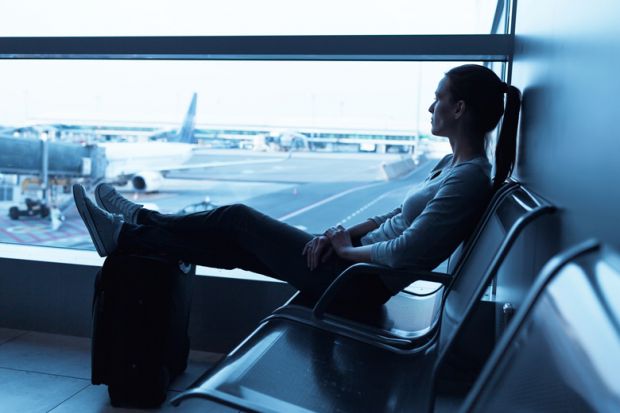
Young woman seated in airport departure lounge

Undergraduates from the most affluent families are up to five times more likely to go abroad as part of their degree than less privileged students, a new study says.

Around one in 13 undergraduates (7.9 per cent) who graduated in 2013-14 and were from higher managerial and professional backgrounds went overseas to study, work or volunteer during their course, according to analysis of the Destinations of Leavers from Higher Education survey, compared with just 1.6 per cent of those whose parents were long-term unemployed.

The UK Higher Education International Unit, which conducted the research, found that the aggregated mobility rate for students from more disadvantaged backgrounds was 3.4 per cent, compared with the overall mean of 5.4 per cent.

There were also significant differences in participation by gender and by ethnicity. Female students were two and a half times more likely to go abroad than their male counterparts, and white undergraduates were around twice as likely to go abroad as their black and Asian peers.

These differences largely disappeared when language students, who account for 38 per cent of all international trips, were discounted.

However, the under-representation of students from less privileged backgrounds, and of black men, was unaffected.

The International Unit said the findings were concerning because, according to its analysis, students from disadvantaged backgrounds were among those who stood to gain the most from going abroad.

Five per cent of students from disadvantaged families who had an international experience were unemployed six months after graduation, compared with 6.2 per cent of less privileged students who did not go overseas, DLHE returns show.

READ MORE

Study Abroad Solution

29 Feb

“The Study-Abroad Solution”

by Sanford J. Ungar via “Foreign Affairs

In the Internet age, the world feels far smaller than it used to. But many Americans still know little about the rest of the world and may be more detached from it than ever. Such a lack of awareness is, in certain respects, understandable. Once the Cold War ended, some 25 years ago, Congress, perhaps out of a false sense of security, cut the foreign affairs budget, which led to the closing of some U.S. overseas posts. The news media, especially the commercial television networks, took their cue and began to reduce overseas coverage—responding, they said, to the decline of public interest in such matters, which conveniently coincided with their own economic woes. Although the 9/11 attacks and the subsequent wars in Afghanistan and Iraq stimulated renewed attention to international events, that phenomenon proved short-lived. Consequently, as new global challenges have arisen in recent years, American discourse on world affairs has lacked historical context or deeper understanding. It has become difficult to stir thoughtful, informed debate on foreign policy issues during congressional—or even presidential—campaigns. Many politicians who aspire to lead the country seem not to understand what constitutes a foreign policy issue, let alone the complexity of dealing with one. A candidate who speaks a foreign language appears almost suspect.

One symptom of Americans’ new isolation is a sharp contrast between the positive, even zealous views they hold of the United States and its role in the world and the anti-Americanism and negative perceptions of U.S. foreign . . . .

READ MORE

Falling in love while studying abroad

15 Feb

“Falling in love while studying abroad”

by College Tourist via “USA TODAY

bubbles, travel, fun, study abroad, love

You might not think that it will happen to you, because, well, what are the chances of falling for someone halfway across the world?

But believe it or not, I told myself the same thing and I was terribly wrong. The reality is that it can happen to anyone.

Falling in love while you’re studying abroad is kind of like living in a bubble. It’s all beautiful, fine, and dandy when you’re on the inside, but eventually, when it pops, the magic fades and it’s back to reality. That’s not to say, however, that falling in love on an exchange isn’t possible or something to give up hope on.

Before you ask, yes, I am indeed a victim of the study abroad love bug. My story is long and complicated, but it’s an experience I certainly wouldn’t go back and change.

Why, you ask? The answer is twofold. You’re caught up in a whirlwind of travel, excitement, and new opportunity and through meeting numerous new people in this elated state, it’s quite likely that you’ll end up “clicking” with someone you never knew existed. Chances are, they’ll even have a wicked accent to draw you in that much easier. Before you know it you might be making up failed excuses as to why you shouldn’t start a relationship while you’re abroad, but over time (even four months abroad is enough time), you might end up changing your mind completely.

Here’s what you might want to know about falling in love abroad before you let the love bug take over:

IT CAN TEACH YOU INVALUABLE LESSONS

If you start a romantic relationship while you’re studying abroad, chances are it will be with someone from a different country. Dating someone with a different vocabulary, accent, customs, and even values can teach you a lot about not only them but yourself as well and what you value in life.

YOU’LL FALL FAST AND HARD

Studying abroad can inflict a kind of illusionary state on a person at first. You’re in a new country, experiencing new things every single day and the excitement seldom ends. This means that it can be easy to get caught up in the moment and fall for someone because you’ll be less focused on the reality of everyday life and more focused on enjoying your time and meeting new people. . . . .

READ MORE

Berkeley Study Abroad offers summer program in Havana, Cuba

12 Feb

“Berkeley Study Abroad offers summer program in Havana, Cuba”

by Ishaan Srivastava via “The Daily Californian

cubaWITHCORRECTIONS-01

After a historic resumption of U.S.–Cuba diplomatic relations and a relaxation of bilateral tensions, Berkeley Study Abroad is now offering a summer study abroad program in Havana, Cuba.

The course provides students with the opportunity to spend one month exploring the geographical and historical transformation of Cuba from colonial times to the present, all while living and studying in “the spirited capital of Cuba.”

“Cuba is — and has always been — a marvelous and fascinating country,” said program director Elizabeth Vasile. “It is a great place to see rapid transformation taking place.”

Vasile, who received her doctorate in geography from UC Berkeley and now conducts research in Latin America, has been leading tours of Cuba for about five years on behalf of organizations such as National Geographic. She approached the geography department chair and study abroad office last year with plans for the program, and received swift approval.

“Unlike a traditional classroom, we’re going to be going out in the field and observing the landscape for ourselves,” Vasile said, adding that her two primary objectives for the program are to instill in students a nuanced understanding of the complexity of Cuban history and the ability to critically observe the world around them.

Peer institutions such as Harvard College and Princeton University have offered similar programs even before President Barack Obama announced his intention to renew diplomatic ties with Cuba. The campus had previously offered a similar program that lasted from 1999 to 2003.

Other organizations such as the travel agency Marazul — which will be providing logistical assistance for UC Berkeley’s program this summer — have been organizing visits to Cuba since 1979.

Members of UC Berkeley’s faculty have maintained professional ties to Cuba despite longstanding diplomatic tensions. Anthropology professor Nancy Scheper-Hughes fondly remembers having invited Cuban medical professionals for a seminar in the early ‘90s, noting that then-Chancellor Chang-Lin Tien was happy to write a letter officially inviting her guests onto campus.

“He even asked whether we could invite Fidel Castro,” Scheper-Hughes said. “That would probably have been a step too far.”

According to Scheper-Hughes, such programs provide students with an opportunity to experience Cuba “before it becomes totally neoliberalized.”

Despite a history of bilateral political animosity, both Scheper-Hughes and Vasile said student safety would not be of exceptional concern in Cuba. Kaylee Yoshii, a campus senior who has visited Cuba multiple times on research trips,noted that the attitude toward Americans in Cuba is welcoming despite the decades of diplomatic hostility.

READ MORE

Before You Study Abroad in the UK: A To-Do and Don’t-Do List

10 Feb

“Before You Study Abroad in the UK: A To-Do and Don’t-Do List”

by Roslyn Kent via “Huffington Post

Failing to prepare is like preparing to fail; get organized, check off that list and do your research before you go overseas to the United Kingdom–you won’t regret be over prepared.

It’s normal to be overwhelmed by all the check lists, packing lists and shopping lists that you’ll undoubtedly be inundated with prior to leaving for your exchange in the UK. Emotions aside, the last thing you’ll want to deal with before you leave is the logistics of your exchange; unfortunately, your mom can’t do it all for you. Not sure what you’ll need while overseas? Here’s what you should and shouldn’t do prior to leaving for your whirlwind study abroad experience:

Don’t:

1. Overpack: You won’t be wanting to bring all your unnecessary bulky toiletries. You will be able to buy almost all of them there (unless you need to use specific brands) and chances are, they’ll be even cheaper overseas (hello Poundland!).

2. Buy a roaming package for your phone: Phone plans are dirt cheap in the UK (the cheapest you’ll pay is £5/month or at the most, £15/month, which will probably included unlimited data and lots of texting and calling). If you extend your phone plan from home it will still cost you more, especially for data–you’ll want data in case you get lost. Try to get a month by month plan so you’re not tied down to anything. If you can, sign up with Three Mobile, that way you can use your phone for free in 10 other countries in Europe!

3. Pay for unnecessary visas: Make sure you’re aware of exactly which visa you’ll need while in the UK. It’s likely your home university’s study abroad office will assist you in this, but avoid seeking advice elsewhere (i.e. from friends who’ve never studied abroad). If you’re a citizen of a commonwealth country then you won’t have to pay for a visa at all if you only plan to stay in the UK for six months. Research the different options and be wary of paying for a visa you won’t need.

4. Bring your hair dryer and straightener: If you want to avoid bringing home a broken hair dryer/straightener, it’s highly advisable that you buy a cheap one over there and share with your roommates. Oftentimes, North American hair dryers and straighteners aren’t equipped to handle the voltage of a UK outlet. If you’re certain yours can handle it then go ahead and bring it with you, if not, it’s better to be safe than sorry! . . .

READ MORE