Archive | China RSS feed for this section
Image

Adventures Ahead!

13 May

DSC02981

Image

Painted Peonies

12 May

Wall

Image

Want a Slice?

8 May

DSC08633

Random Chinese ~ My Name Is. . .

7 May

Now that I’m living here in China, I’m starting to pick up a little bit of Chinese 🙂 Some of this is from classes, some from my textbook, and most from talking to the locals. But knowing Chinese is very important here, since the English of the older generations (who manage the businesses) is still not very fluent.  

I thought I’d share a few words as I learn them; maybe they will help other new laowai (foreigners) who come to check China out 🙂

Warning, DeceptivelyBlonde (DB) pronunciation uses no tones and is only meant to get you by if needs must 🙂 It’s the redneck Chinese.

What’s Your Name?

Question:

English: What’s Your Name? 

Characters: 你叫什么名字 ?

Pinyin: Nǐ jiào shénme míngzì? 

DB Pronounciation ~ knee jou shehn mah meeng zuh

Answer: There are two answers- formal / informal – informal is okay for us laowai usually.

Informal

English: My name is . . . (Olivia)

Characters: 我 叫 . . . (我 叫 Olivia)

Pinyin: Wǒ jiào Olivia

DB Pronunciation ~ woah jou  . . . 

Formal

English: My name is . .  . (Olivia)

Characters: 我的名字是. . . (我的名字是 Olivia)

Pinyin: Wǒ de míngzì shì . . . 

DB Pronunciation: woah duh meeng zuh shuh

Image

Festival Carver

5 May

DSC08614

Walk Through Chinese Festivals :)

4 May

Image

Walk in the Park

1 May

Walk

Image

Sea of Umbrellas

28 Apr

Sea

Luoyang Peony Festival

23 Apr

Luoyang Peony Festival!

Follow up on part one of my Luoyang visit! You can see my post about the Longmen Grottoes in Luoyang, another beautiful site to see in the area 🙂

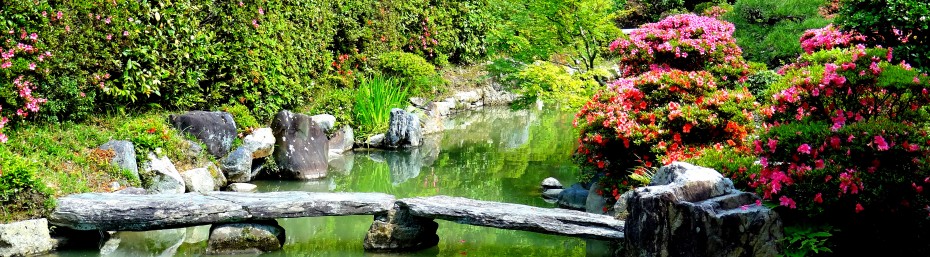
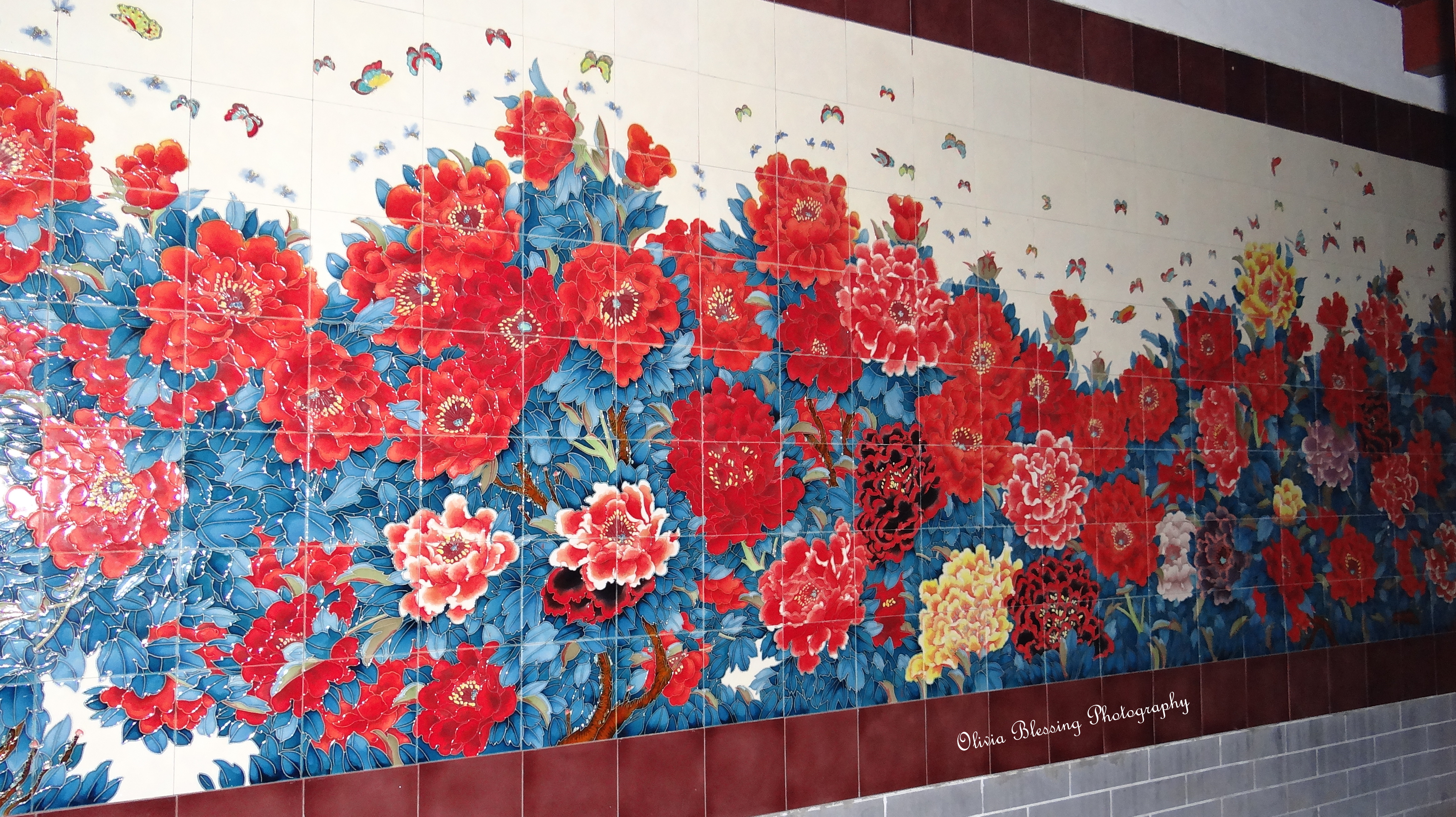
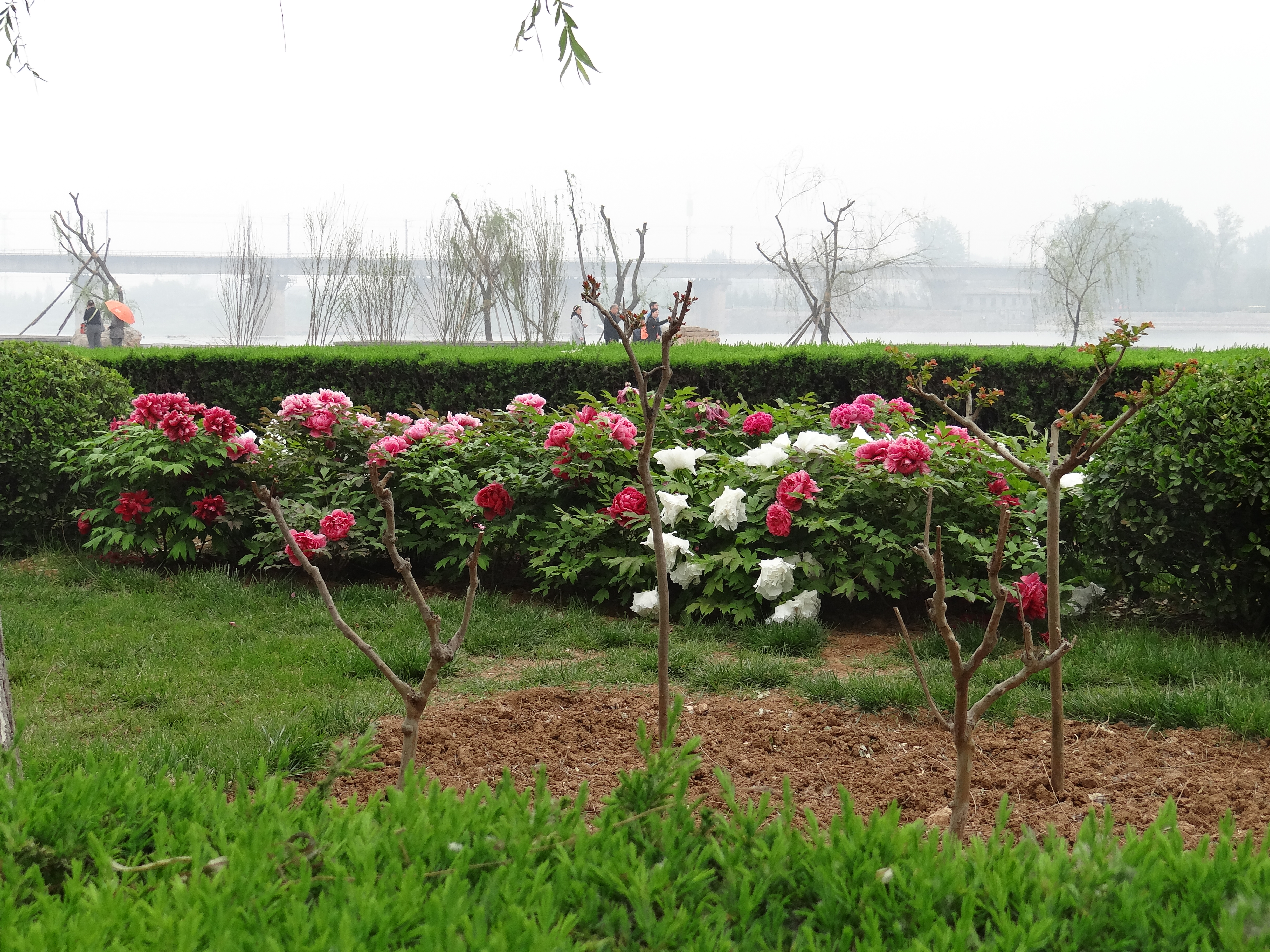
Did you know that for a long time the Peony was actually China’s official national flower? And it started right here in Luoyang, where the Peony was the flower of kings and noblemen.   Now, there are many types of Peonies grown in the gardens of Luoyang, and those gardens are opened up to visitors during the annual Peony Festival!  

Every year from the middle of April until the middle of May, the Peonies bloom and visitors from around the world come to check them out.  The festival itself is during the peak time, usually April 15-25, when the flowers are at their most stunning.  

There are many, many Peony gardens you can see, for example the Luoyang National Peony Garden (it was too busy so our tour bus couldn’t reach it; we checked out another garden) is said to be the very best.  But there are many others you can see, like the one we visited. It was much smaller, but still breathtaking!  You can check out China Highlight’s post for a list of options and prices!

You can reach Luoyang via Train (approximately 4 hours from Beijing and 8 hours from Shanghai) or by Flight, and the price to the gardens isn’t too bad. There are lots of hotels and restaurants to check out, and many other sightseeing activities for your family 🙂

Stone-Faced Buddha ~ Longmen Grottoes

22 Apr

DSC08726

Longmen Grottoes

Took a little trip to the Luòyáng , China this past weekend as part of a culture trip hosted by the University! 

Pronounced something like “loi yahng,” this beautiful home to the National Peony Festival (I’ll add an update on the Peony Garden later) is one of the “cradles of Chinese Civiliazation” and one of the ancient capital cities of China (Henan has 2 of them! – Luoyang and Xinzheng).  The city itself is amazingly clean and open, the streets are unlittered and it’s pretty modern.  
DSC08783

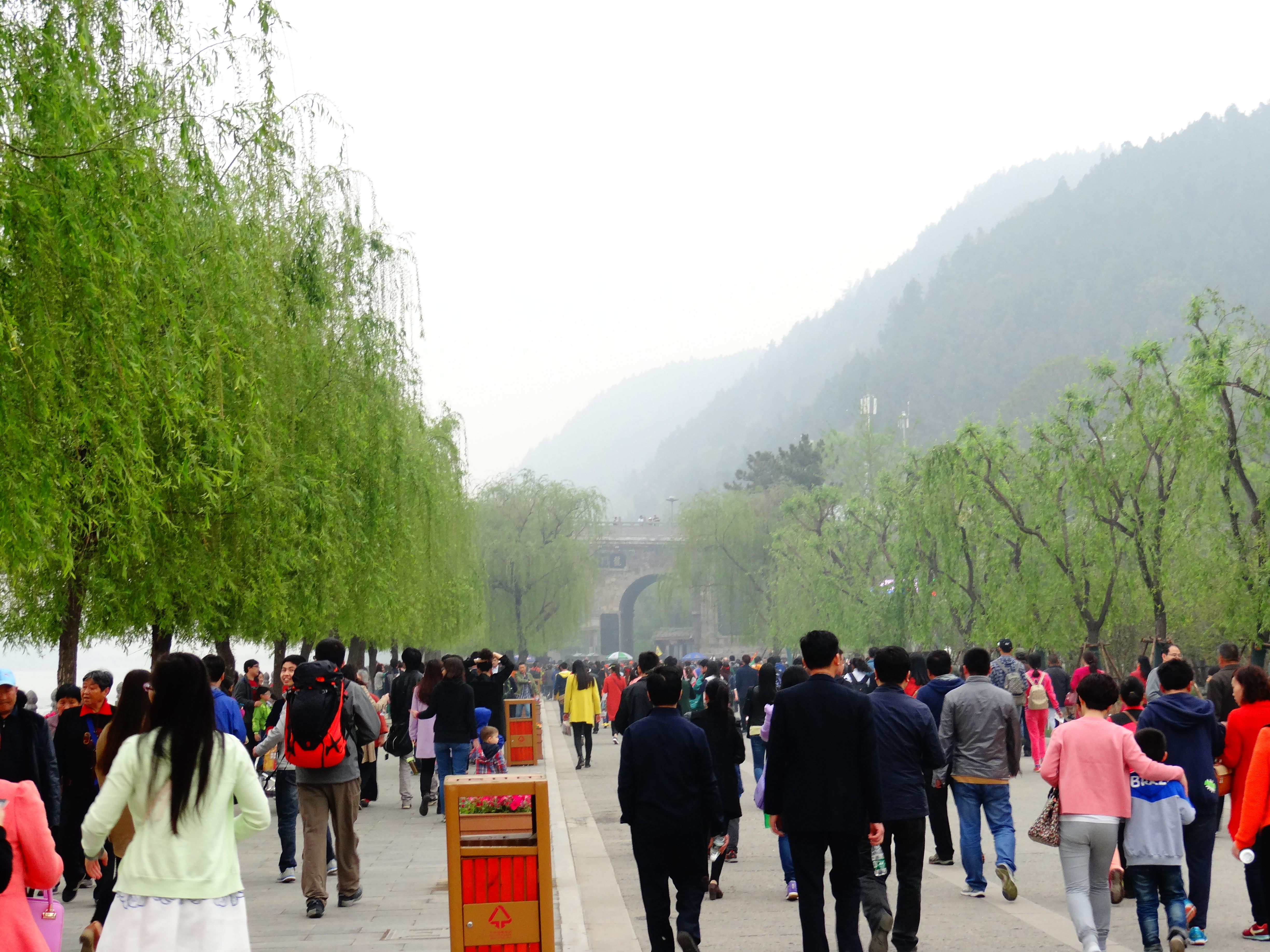
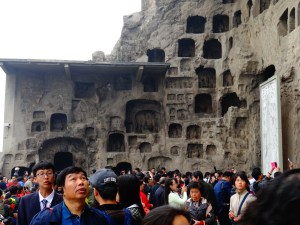
The best part of my visit by far though was the Longmen Grottoes and the Peony Garden.  This week was part of the 2 week festival they have each year for the Peony festival, so people were everywhere despite the rain.  

DSC08653

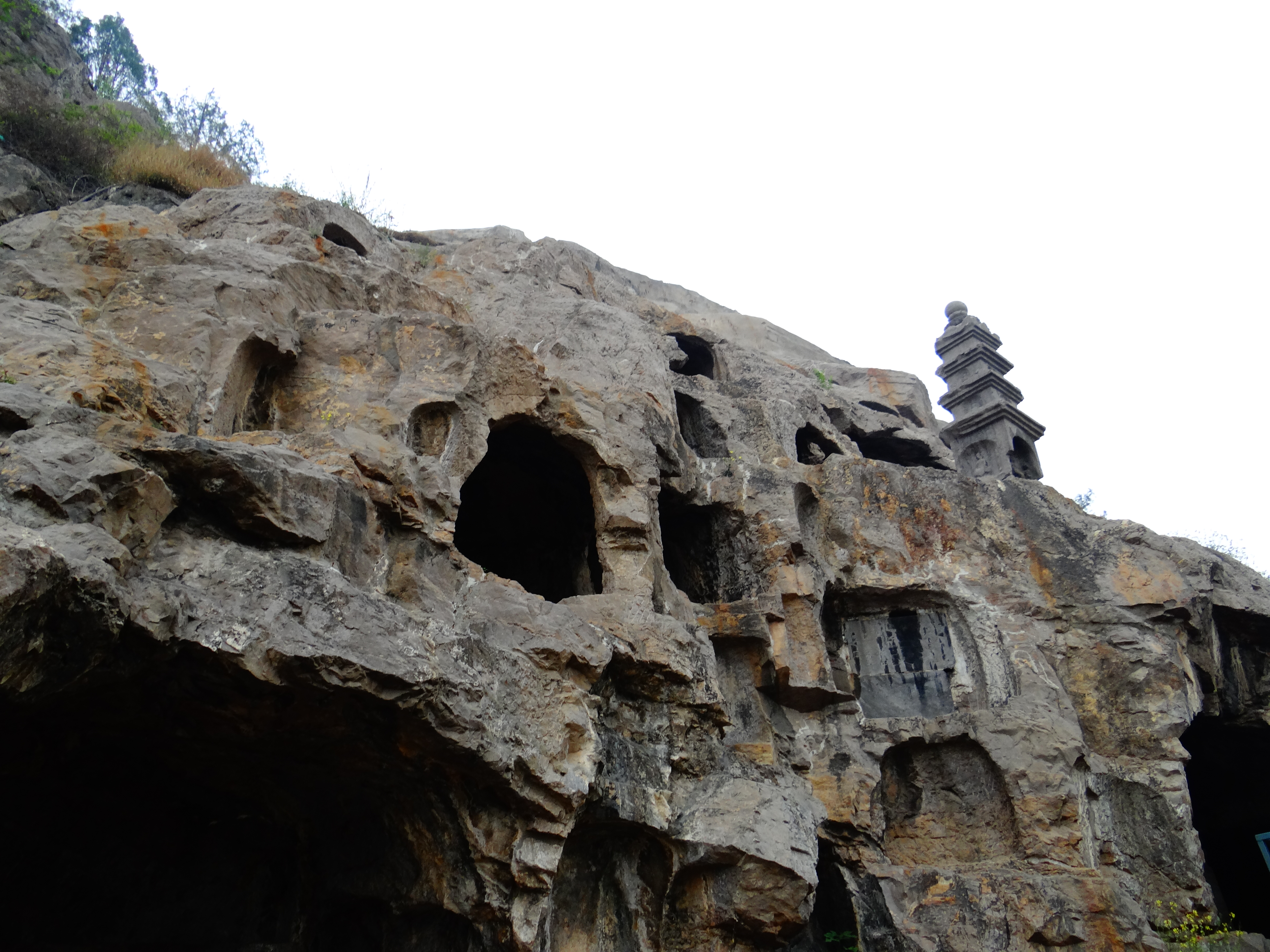
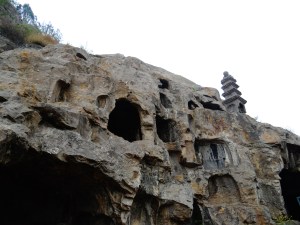
The Longmen Grottoes themselves are absolutely mind-blowing ~ an amazing feat of human design and capability. To imagine that such intricate  design, specific carvings, and gentle touch art were feasible so many centuries ago is one of those things that always stops me in my tracks. I know a lot of people aren’t as interested as I in history and stone statues (several of the teachers I was with were fairly denigrating about spending so much time in a “Stone Garden). But to me, standing on the same ground, touching the rocks they touched, seeing the art they created, glimpsing pieces of hearts long past. It’s simply miraculous.
DSC08700

The Grottoes are home to thousands and thousands of carvings on the stone faces of the mountain cliffs. Most are of Buddha or his followers, some are pagodas, buildings, and other designs. The varying stone colors used to frame and decorate the statues, each one different from the rest.  Carved over a period of centuries (5th – 15th Century AD), each set was designed by a different artist, many from completely different times. You can trace the changes, both in religion and philosophy (skinny to fat Buddhas for example) and in art styles.
DSC08696

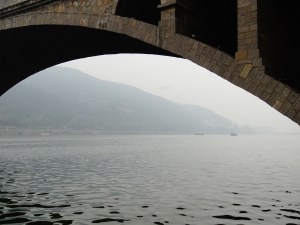
One of the other reasons the grottoes is so stunning is the River Yi (pron. ee) that runs alongside the valley in front of the rocks. The river is clean and beautiful, sweeping along a lovely walkway as antique-style dragon boats float up and down.  Stone bridges line the view, criss-crossing over to the other side that offers views of antique buildings lining the mountain paths.
DSC08661

 It’s just a beautiful way to spend a day