So long everyone! I’m off for China today. I wish I could keep posting but I’ve been warned that Internet there may not let me. So this may be goodbye until July 27, when I return to Korea. I’ll have lots of stories to share!! ❤

So long everyone! I’m off for China today. I wish I could keep posting but I’ve been warned that Internet there may not let me. So this may be goodbye until July 27, when I return to Korea. I’ll have lots of stories to share!! ❤

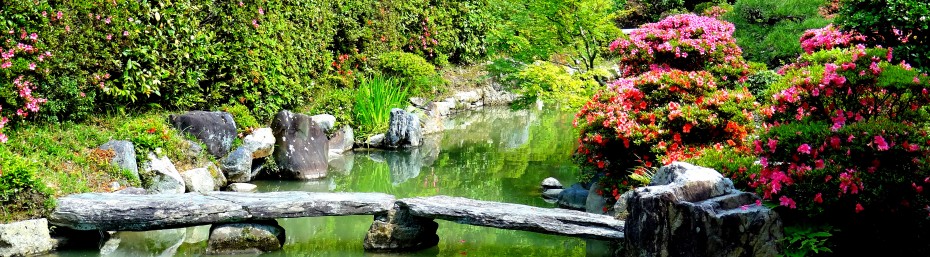
It’s funny, but when they told me I would be visiting Kyoto’s most famous gardens; somehow my brain was picturing a type of botanical garden such as you would see in the U.S. You know, open rows upon rows of flowers, all arranged carefully around small stone water fountains. Suffice to say, I had it more or less completely wrong (kind of like when they said I was going to a monkey zoo and instead took me hiking to the top of a mountain to see them in their natural habitat mid-forest).
The Chishaku-In garden is actually rather small and compact, but what there is of it is stunning. Carefully interwoven around some lovely temple buildings and tucked up against one of the many mountains in the area, the gardens consist of small Continue reading

Cigarette Vending Machine
Holy cow, there is just no way to describe all of the things you can get in vending machines here in Japan. Continue reading

Is it possible to fall in love with a country in just two weeks? In some ways, Japan is very similar to the US. Every other block has the old, familiar sight of a Starbucks, McDonald’s, Seven-Eleven Convenience Store, and bus stops. Go to a store and you’ll find Pringles and Doritos chips, Tide laundry soap, Dove shampoo, and Apple computers. Afternoon tv shows tend to be some serious drama that is reminiscent of US soap operas. Despite the language barrier, you can always still recognize that look from a Japanese mother towards her child that means innately “sit still.”

Recognize this company? Take a look at your local TV store!
But at the same time, there is something so unique, so different about life in Japan. So here are 10 things Continue reading

Parthenon
The artistry is exquisite; the detailing impressive. Built from 447 B.C. to 432 B.C. when such a building was truly a monument to the creativity and abilities of the Greeks, the Parthenon’s beauty has survived generations and centuries to remind the world of the power of human ingenuity. Carefully built upon a solid foundation of limestone and painstakingly elaborated with carvings of Pentelic Marble, the Parthenon has 46 separate columns surrounding the building. Above those columns, dozens of detailed marble plaques were embedded in the roof (1). It is these plaques that have been the center of so much debate in recent years (1). You can actually still see in the photo below the places where these embedded marbles used to be. Continue reading

Pope Benedict XVI
Before explaining the election process itself, it is necessary to offer a very brief explanation of the participants. Naturally, you will first have the previous pope. The Catholic pope is the highest-ranking authority within the church. The process of electing a new pope begins when the previous pope no longer holds the position. The second group of participants are certain members of the Bishops (the second highest-ranking group of people). These people are chosen by the pope from amongst the thousands of Bishops around the world to serve as Cardinals (2). The Cardinals only job really is to serve as advisors to the pope and to elect a new pope when needed (2). Currently there are 117 Cardinals eligible to vote, although only 115 actually took part (3). Finally, you have the potential successors to the position of pope. Technically, any Catholic man who meets certain requirements (basically is of a certain age and hasn’t done anything to put them on the wrong side of God and the Church) is eligible (4). However, usually the winner will be one of the Cardinals themselves.
Up until now, usually the election process would start with the death of a pope. However, while Pope Benedict XVI is not dead, the process will remain the same this time. The process was most recently updated by the Universi Dominici Gregis (5), a document established during the reign of Pope John Paul in 1996 (1).
As of March 13, 2013, the new pope has been elected! His name is Bergoglio (Francis I) of Argentina
Hats off to some of the most brilliant and determined people of a generation. Whether or not you agree with the dropping of the bomb, you have to admit that it took guts and changed our future forever. I can’t imaging having the courage to even get close to the thing, much less put my name on it! Personally, I’d have been in the country over (or perhaps Brazil. . . somewhere very far away!
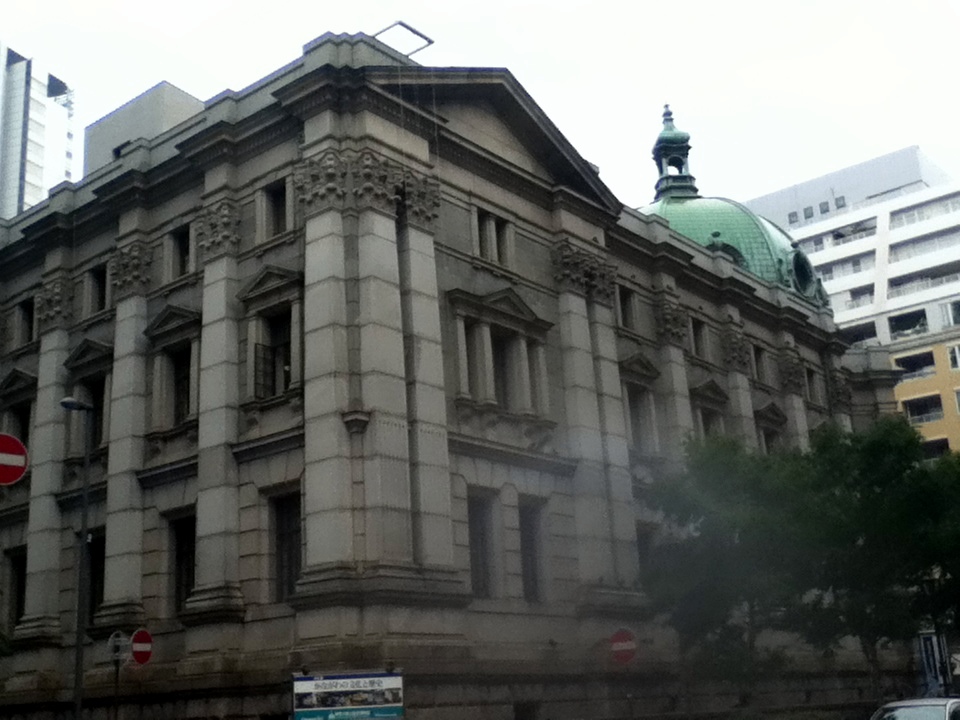
Kanagawa Prefectural Museum
Okay, I admit it. I’m from a VERY small town in a VERY small country, so my local county museum consisted of the old mansion home of a local famous/wealthy horse breeder, an old schoolhouse, and about a dozen ancient oil lamps and doilies. So in my mind, county museums mean small, not a whole lot to see, and an interesting hour or two.
Well, over the summer I was visiting Yokohama and ended up with a couple hours to spare. Since I was in the area, I decided to visit the Kanagawa Prefectural Museum, which is basically the city’s county museum. Now, I’m thinking I’ll see an old building, maybe catch a few old photographs, and see some old pottery, while still making it out in time to grab some souvenirs for family. But what I didn’t take into account was the fact that Midwestern US museums’ greatest events are the soldiers leaving for WWI, WWII and the wars thereafter.
Kanagawa, on the other hand, has thousands of years of history spanning dozens of empires and centuries of religious, cultural, and social upheaval and development. It’s survived hundreds of rulers, the bombings of WWII, the rise of Buddhism and the introduction of Christianity, the 1964 Olympics, and was the landing sight of Commodore Perry, the man who forcibly opened Japan to the west. So what I found was practically another national Museum.
Now, everything was in Japanese (and I do mean everything, even the brochures were untranslated). But it was also empty, so all the people were standing around waiting for people to come. They saw me wandering around and before I knew what was going on I have 4 different employees following me around with a translator machine explaining all the exhibits and what they meant. I got my own personal tour of this awesome place! Everyone was incredibly kind, and my visit (which actually took 3+ hours) was an unexpectedly amazing event.
I apologize for the quality of these photos, I ran out of film earlier in the day and was stuck with my Ipod. 😦 Still, they show what an amazing history this place has!
They also had Buddha statues, more sculptures than I could count, dozens of ancient maps, stunning paintings, and some amazing photography, as well as many other artifacts and cultural resources. It was a wonderful place to visit!
If you’re in the area and want to stop by, you can find out more information about the Museum here. I think it cost me about $6-7 total, but I don’t quite remember. Museums in Japan are more expensive than those in Korea, but I remember that this one wasn’t too bad. Great place to visit and it’s right down from Kannai street (a famous shopping street in Yokohama). Look it up!

Panda Mural in Chinatown
Whew! These past two weeks have been amazingly busy, sorry for not posting anything earlier!
I’ve recently been trying to get all of my law school classes in order, but I think I’m going to give up on that effort. It’s impossible to figure out how to juggle all of the classes, clubs, volunteer hours, and Research Assistant work. Right now, I have been manning a taco table for the Latino Law Students Association, while looking up various research for the Iowa Volunteer Lawyers for the Arts project, at the same time that I look into topics for a research paper in the Cultural Heritage class. 0_0
Anyway, I managed to stumble across an idea I think I’ll use for the Cultural Heritage class, and I’m interested to see if anyone has some input on it. Continue reading
WWII was a war unlike any the world had seen before, and not just in the monstrous brutality so viciously enacted in the course of those few years. There was also the fact that, for the first time in history, this was a war focused upon covert operations and guerrilla warfare.
In other words. . . this was a war of spies. Continue reading
“She was free in her wildness. She was a wanderess, a drop of free water. She belonged to no man and to no city” ~ Roman Payne




Language Translation






 Deceptively Blonde