Archive | History RSS feed for this section

Chinese Cultural Beauties ~ Moderation

11 Nov

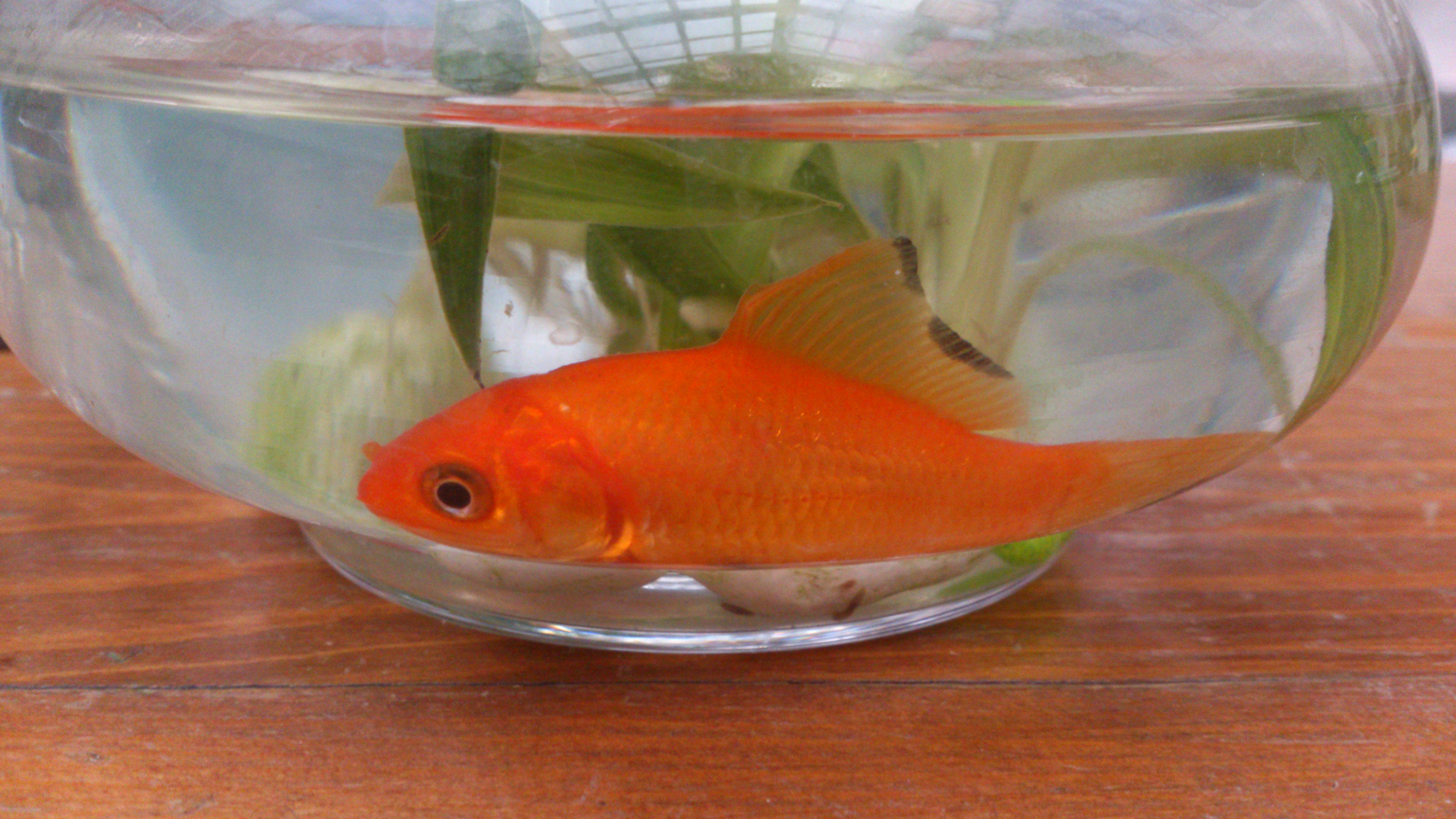
DSC_0463

The local cafe has recently acquired a new employee devoted to customer happiness ~ Gordy, the resident Koi fish 🙂

Adorable little guy, he swims around in his bowl quite contentedly, entertaining children and adults alike.

Having attempted to keep koi fish myself and discovering a problem wherein they kept dying, I asked the owner how they have kept him alive so long.

One of the beauties of Chinese culture is how often they answer simple questions with ancient proverbs or philosophical explanations.

The owner’s enlightening response was that the key lay in finding moderation.  The Koi fish are like people~they are a little strong and a little weak. They have particular environments that they need to survive. If it is too clean and easy, they will be lazy and unhealthy.  If it is too dirty and difficult, they will be depressed and find it hard to breathe. They need balance to survive.

So every day, he changes Gordy’s water. But where I would change the water completely, they balance clean and dirty water. They dump out half of the old water and add half with new/fresh water.  This way, the water is a lot like the local ponds that Gordy comes from ~ a little fresh water (from rain and connected waterways) and a little dirty water (from algae, dirt, and other natural dirtiers).  In this natural environment, Gordy grows both strong and happy.

Go Gordy! Live Long and Prosper!

History of Our World: The Korean Origins and Foundations Myth

9 Oct

Korean legends are a fascinating world to immerse yourself in–of course as an avowed student of Myths and Mythology, I could perfectly happily spend my entire life in the fantastic world of eastern stories.  Of a particular interest to me are the origin stories of creation and cultures, a passion which led me to research the Korean story of creation and the Korean culture’s origins.

Mythology and stories about the beginning of the world can be divided into two categories ~ 1) Creation Myths which tell of the origin of the world and 2) Foundation Myths, a subset of the Creation genre, which more specifically relate the origin of a people, nation, or culture. 

As one of the great ancient peoples, it is only natural that much of Korean myths come through to us in the oral tradition.  Still, Koreans do not have much in the way of “Creation of the Earth” myths ~ most of their stories and legends presume that the world was already in existence when the tales begin.  

There are a few minor oral tales that claim the world began (as so many origin stories hold) in a time of utter chaos and an absence of any type of creation or order.  The stories go on to say that suddenly a crack appeared in the heavens, dividing the earth from the skies.  But those are very minor, basic tales lacking any deep specifics or embellishments.  

Rather, Korean myths tend to fall into the realm of Foundation Myths ~ sharing the origins of Korea and the Korean peoples. There are several variations, of which the most popular is the Myth of Tangun, which speaks of Hwangun, a beautiful character of strength and eternal goodness.

Once upon a time, many centuries ago, the great Heavenly God Hwanin had a noble son whose name was Hwangun.  Hwangun had looked upon earth and fell in love, wishing greatly for the chance to come to earth and rule over it so that it might prosper.  After learning of his son’s desire and examining the situation on earth, Hwanin decided that his son’s leadership would benefit the earth and so decreed that Hwangun should go to earth and take charge.

Before he left, Hwanin gave his son three Treasures from Heaven that would signify his authority and right to rule.  Taking these with him, Hwangun finally embarked on his great mission.  Taking 3000 spirits with him Hwangun first alighted on a mountain in Myohyangsan, a place in the modern-day North Korea.

Along with his great assistants, the spirits of the wind, rain, and cloud, Hwangun began implementing his leadership and guided the earth into a time of prosperity and splendor.  

After some time had passed, Hwangun began to be pestered by a tiger and bear who came visiting him and begging for human forms.  Taking pity on them, Hwangun set before them a test~ they were to fast for 100 days and then they would receive their human bodies.  Now, the bear was very diligent and passed the test, finally transforming into a female and enjoying her new form. The tiger was not so steadfast and failed to transform.  But the bear was greatly saddened, for she realized that there was no one on earth for her to mate with and thus no children would come to her.  So daily, she went to the alter and pleaded with the Heavens to provide her with a child.

Once again feeling pity for the tragic bear-woman, Hwangun transformed himself into a human form and married the woman.  Together they had a son, who they named Tangun.  Tangun was the man who, in the time of Emperor Yao (one of the Five Emperors of China in the 2300s-2200s BC), established the first human Korean city in Pyongyang and the first Korean dynasty~ the Choson dynasty.

There are of course several variations of this initial story, but this is the tale in its original and most basic form. Even, to me, the most beautiful form.  

What do you think? Does this sound familiar to your culture’s foundation myth? Any themes or similarities that cross cultural bounds?  Let me know in the comments!

If you are interested, this story is some-what re-told (with major alterations) in the Korean drama “The Legend“~ it’s a great watch, both for the beautiful storyline and insight into Korean cultures/ideology.

Happy Birthday to China!

9 Oct

DSC00179

This is the week where China celebrates its birthday!  Lots of Fireworks!

Zongzi

3 Jul

Mmmm.Mmmm. Good!

😛

June 20th was the Dragon Boat Festival (aka Duanwu Festival), celebrated by families and festivals all over China every year with delicious food, boat races, and fun times. 

According to Jerry, the high school student I was tutoring, the Festival originated many centuries ago.  All those many years ago, a greatly beloved leader of China (he said king; another student said it was a famous poet/advisor instead) was forced to watch as the enemies overwhelmed his people. Heart-broken at the loss and devastated by the tragic future his people were facing, he cast himself into the river.  The people on the shore saw as he fell into the water and raced out on their dragon-shaped boats to save him.  Unfortunately, they could not locate his body, so they threw out special rice cakes as an offering and means of remembering his sacrifice.  

To this day, they honor this great leader by hosting dragon boat races and eating Zongzi (Zohng zuh)~ sticky rice balls made of a special type of rice and either fruits or meat- date filled Zongzi are the most popular here in Zhengzhou.

The video below isn’t mine, but it shows what the festival looks like!

Another student says that they also have a tradition with hand-made bracelets – boys wear them on one hand (I think the right); girls wear them on the other. Then on the festival, they thrown them into the river to cast off bad luck.  I tried the bracelet thing and ate my Zonzi, so this year should be pretty good! 🙂

Lady of the Lily

14 Jun

DSC09014

This past weekend was Homecoming for the Students at SIAS, so the Freshman and Sophomores help design floats for their different departments and schools.  This was one of the floats – the lily started closed, then slowly opened as the young girl danced up out of it in the traditional flowing sleeves dance. Very beautiful!

Life in China: Apple I-Pad

12 Jun

Apple I-Pad

The Queen is NOT amused.  In fact, I’m pretty down-right Pi**ed (pardon the language).  After all the trouble I’ve had, I thought it pretty necessary to update all future China-Travelers to the dangers of buying/using Apple products here.

I don’t remember if I told you all this, but Lawrence the Laptop has had another revolt. He attempted going on strike via a broken LCD screen; I cut him off at the start via a nice HDMI connection to my television.  Unfortunately, he laughed in my face and promptly refused to work without the HDMI connection. No need to get into it, it was a whole thing.  

So last November, I bought an Ipad 2 during China’s version of Black Friday. I’ve had an I-Pod for several years, which lasted pretty well and I figured I’d give their tablet a try.  YES, I checked and it is a legit Apple I-Pad; had it tested by the real Apple Company in Zhengzhou (it’s on the apple website as a legit seller).

WRONG!  BAD! Stupid Olivia!  

Here’s Why. .

Price: 1800 RMB (approx. $300)

Review: The price was a little expensive for my tastes (almost all of Apple is), but I figured it was worth the bargain.  Apple products in China tend to run a bit pricier than products in America. Go figure given that they are literally produced about 10 miles away in the city I live in.  They have their own personal runway at the international airport they ship so many Apple products out of here. Yet we still get charge at least 50% again as much as American buyers.  So, I had to wait until 11/11, China’s Black Friday shopping day to pick one up from Hong Kong.  

Initial Purchase: Semi-Good; Semi-Problematic

Review: The first shipment I got was not too terrible.   It came with the charger, a cover, a screen protector, and ear plugs, pretty sweet all together.  The I-Pad itself was unmarked and undamaged, it seemed like everything would be okay.

It worked for about 2 hours, and then problems started.  The swiping part of the screen wasn’t working. It would stall up, like the screen was locked. You could go up about half an inch and down about half an inch, but otherwise nothing was happening. Buttons wouldn’t click, etc.  So we tried turning it on and off again (the answer to most issues), which revealed that the lock screen was not working either. Once again, I couldn’t swipe from the screen saver to the unlock screen. When I did finally get to the lock buttons, it froze and wouldn’t click them.  Tried a hard reset and several other options, nothing worked.  

So we called the seller and sent it back.  They kept it for about two weeks and finally sent me a new version.  This one seemed fine, so life moved on.

Use: Final Product

The final I-Pad I got worked fine soft-ware wise.  Sometimes it would randomly shut down songs or the internet would stop working, and none of the VPNs like it at all.  Otherwise, it was great and I was happy.

Hard-ware wise, the screen cracks like crazy. Literally, press to hard on the screen when punching a button and the whole screen cracked.  I put on a super duper safety case on it intended for toddlers, took it off and the whole edges were broken.  I asked the computer fix-it people and they said it sounds like I was sent a re-furbished model that had a cheap screen put on it.  The screen supposedly should not have cracked like that, but they verified the computer was really apple so they think the screen was just replaced with a cheapo version.  

I was not happy, especially knowing it takes 300 RMB to fix the screen. Furthermore, they admitted that if the top screen breaks the second lower screen there may be no fixing it at all?!?  0_0 Don’t you think that’s something they should have told me about before I bought the I-Pad?  I did a ton of research into I-Pads, I asked questions, and this never came up.  

ERROR: Blue Screen of Death

Anyways, along I go using  my ipad for about 5 months, when suddenly the screen goes blue and the whole thing just shuts off.  Black. Off, no charging, no connecting to the computer, no nothing.  Reset doesn’t work. Plugging it in to the computer doesn’t work. It is dead as a doornail for no apparent good reason.  No warning, that would be too nice. Just stops in the middle of a show.  Takes with it my calendar, contacts, messages, photos, videos, notes, everything. So off I go to the computer store to have it fixed.
Continue reading

Luoyang Peony Festival

23 Apr

Luoyang Peony Festival!

Follow up on part one of my Luoyang visit! You can see my post about the Longmen Grottoes in Luoyang, another beautiful site to see in the area 🙂

Did you know that for a long time the Peony was actually China’s official national flower? And it started right here in Luoyang, where the Peony was the flower of kings and noblemen.   Now, there are many types of Peonies grown in the gardens of Luoyang, and those gardens are opened up to visitors during the annual Peony Festival!  

Every year from the middle of April until the middle of May, the Peonies bloom and visitors from around the world come to check them out.  The festival itself is during the peak time, usually April 15-25, when the flowers are at their most stunning.  

There are many, many Peony gardens you can see, for example the Luoyang National Peony Garden (it was too busy so our tour bus couldn’t reach it; we checked out another garden) is said to be the very best.  But there are many others you can see, like the one we visited. It was much smaller, but still breathtaking!  You can check out China Highlight’s post for a list of options and prices!

You can reach Luoyang via Train (approximately 4 hours from Beijing and 8 hours from Shanghai) or by Flight, and the price to the gardens isn’t too bad. There are lots of hotels and restaurants to check out, and many other sightseeing activities for your family 🙂

Email in China

1 Apr

Over time, it gets harder and harder to use Google and Outlook products here in China. This is a particularly large issue for the wonderful world of email.  Gmail and Outlook mail are no longer working properly even with a VPN.  

The largest problem I’m confronting right now is that Chinese services are blocking “Received” messages from Gmail or Outlook accounts.  For example, QQ (which my students all use), is completely rejecting anything from GMail or Outlook.  

So what can you use?

Well, here are a couple alternatives:

  • QQ – This is what most of the students are using. Basically, you register and download QQ International, and one of the options available to you with an account is QQMail.They have unlimited space and you can add large attachments. The downside is remembering your totally random QQ# email address (e.g. 123456789@qq.com).
  • Foxmail – Doesn’t work with a VPN on.  Offers you an email system that’s pretty good
  • 163.com – Download with Google Chrome browser so you can translate the system into English while you set up your account. Pretty good, a lot of students use it.  

I’ll try to do a comparison on them later. Right now, I use QQ, and I like it a lot. I do get tired of not being able to send an email to very many people and you keep having to enter confirmation codes. But it works!

Image

Want to pet. . . .

3 Mar

IMG_0399[1]

CAQ: Is China Safe?!? – The Health Issue: Pollution

27 Feb

Continuing the Commonly Asked Questions series based on questions people give me about China.  While it may not answer everything, I hope that it will clear up some big misconceptions people  have about this beautiful country.  You can find the first part “Is China Safe: the Size/Language Issue Here.

CAQ #2: Is China Safe?!? ~ the Health Issue: Pollution

Yes, this is really what my city looks like some days


Concern: China is a scary place with backdoor doctors, unsanitary practices,  horrifying pollution, and dangerous hazards lying around everywhere.

I’ll start by addressing Pollution in this post~ the biggest concern for most people.  Is there  pollution in China? ~ Yes, of course there is.  There is also a lot of pollution in the US, Korea,  Japan, England, India, etc.  Is smog a problem? ~ Yes, smog can be a bad problem, especially on   certain days.  The worst of the smog arrives when we haven’t had rain in a while (Henan had a  drought this year, so that didn’t help), when they burn off the fields in the fall, and when the  machines are running extra long at the local factories.  There are certain days when skyscrapers  right in front of you completely disappear and you can taste the acid in the air.  I’d say that’s been about 7-8 days in my first semester here in China (Aug-Feb).  It can be really, really bad.

1

My City Today


Of course, I live in Zhengzhou which is one of the worst cities in China, so I can’t measure the rest of China by that. You can see a rating every day for most Chinese cities’ pollution level here, and  Zhengzhou is always pretty bad. But if Zhengzhou is the worst they have to offer, I don’t  think the problem is as prevalent as people believe. 

First, I’d like to say (and I’ll probably repeat this in later posts), a large part of your ability to withstand the smog depends on your own body.  Personally, I generally suffer from serious skin sensitivity and asthma; one bad day in the US will knock me out.  But in China, I’m actually the healthiest I’ve been in a while. My skin clears up, my asthma goes away, I suffer fewer headaches, I’m breathing much better.  Others are the opposite; they’re fine in the States and then get landblasted with respiratory illnesses here.  I think a lot of it is dependent on how your body likes certain environments. Mine seems to like China.  

Furthermore, as far as actual pollution goes, it isn’t like every single day I am terrified of  walking out the door. Only about 2-3 days this semester have I been unwilling to leave  without a mask.There is also the fact that Zhengzhou has coal mines not to far away ~ and  that always adds to the issue, just look at the coal towns in West Virginia.  We have to dust about  twice a week to clean the black off everything, especially outside windows. That gives me a few  concerns about Black Lung or something similar, but it’s my own fault for choosing to live so close  to the coal mines.

Seeing the sun in a bright blue sky is a pretty rare sight around here, but we do get it, especially  after a rain.  And I can see the stars many nights, so long as the fireworks haven’t smoked the  place up. I breath fine for the most part, although I know some people who struggle.  They do have masks everywhere; you can always pick one up to help you out. I personally never really use them unless it’s during the crop burning week. 

One nice part about China is that the people here are incredibly health conscious and actively work to clean the mess up.Even big  factory owners know that their children have to breathe in ‘the air they create; it provides a lot of incentive to clean the mess up. ‘They are truly worried about the situation, and there are constant 

discussions on how to eliminate or guard yourself against the threat posed by air pollution.  They  have extremely advanced masks, they make sure that everyone knows what days to avoid going  outside and what days it’s okay. They are constantly planting trees, bushes, shrubs, and adding water in an effort to combat the problem and reoxygenate the air.  Zhengzhou even bought a “Smog  Machine!”  It goes around the streets spraying water in an effort to cleanse the air.  🙂 

If you move further out of the big cities, the problem isn’t half as bad anyway.

So maybe some cities in China are worse than most of the United States, but they are working with millions more factories, mines, people and other pollution causing issues. As my student’s say,  just look at the advancements they have already made in eliminating causation factors. Give them a few more years, and they will probably have advanced in leaps and bounds.  They like their  clean air, and generally the Chinese are a stubborn/innovative set. If they want clean air, they’ll  find a way to get it. It just takes time and patience, and a willingness to wear a mask every so often till the problem is fixed.