Tag Archives: History
These Dreamy Photos Answer The Question: ‘What Would I Have Looked Like In Another Decade?’
Page 1


![IMG_1071[1]](https://deceptivelyblonde.com/wp-content/uploads/2014/05/img_10711.jpg)
Preview: “Charles James: Beyond Fashion” at the MET
16 MayI like his style . . . Very feminine and flowing

“Charles James: Beyond Fashion” at the MET

Anglo-American designer Charles James (1906-1978) is one the biggest names in mid 20th century American fashion, a designer who thought of fashion as a mathematical science. From Thursday May 8 to Sunday August 10, 2014, the Costume Institute at New York’s Metropolitan Museum of Art is opening to the doors to the “Charles James: Beyond Fashion” exhibition, which celebrates the work of the visionary designer. With just a few days until it officially opens, Vogue.fr brings you a look at some of the iconic images on display in this year’s MET exhibition, which draws huge crowds every year.
View original post 226 more words
Historic Fashion
1 MayThese Dreamy Photos Answer The Question: ‘What Would I Have Looked Like In Another Decade?’
by Sara Roncero-Menendez via “Huffington Post”
From the scrunchies and jean jackets that dominated the 1980s to the plaid shirts and heavy boots that defined 1990s grunge, everyone has their favorite teenage fashion trend. But what would we have worn if we were flower children of the 1970s or flappers of the 1920s? Ohio State University student Annalisa Hartlaub was able to paint a picture by depicting each decade’s quintessential mainstream and counterculture looks. Using herself as a model and tinting each picture to realistically reflect the technology of the decade, Hartlaub’s “Counter // Culture” photo project catalogs nearly 100 years of fashion history from 1920 through today.
The sixteen-year-old artist created the collection primarily for her photography class, but Hartlaub has always had a love of the alternative. “I’ve always been fascinated, and a bit infatuated, with counterculture and how it shapes society and mainstream culture as well. So I decided to mix that interest with my love of fashion, makeup, and photography to create something,” Hartlaub told The Huffington Post.
1920s

READ MORE
The Hundred Years War: A Short Presentation and Handout
19 MarThis is the helpful handout I passed around. Helps keep things clear(ish) .
.
“Epiphany 2014: Dates, Customs, Scripture And History Of ‘Three Kings Day’ Explained”
6 Jan
Happy Thanksgiving!
28 NovThanksgiving Rhyme
The year has turned its circle, The seasons come and go. The harvest all is gathered in And chilly north winds blow. Orchards have shared their treasures, The fields, their yellow grain, So open wide the doorway~ Thanksgiving comes again!
10 Things I Will Miss About Japan (and 1 Thing I Won’t)
25 MayPage 1

Is it possible to fall in love with a country in just two weeks? In some ways, Japan is very similar to the US. Every other block has the old, familiar sight of a Starbucks, McDonald’s, Seven-Eleven Convenience Store, and bus stops. Go to a store and you’ll find Pringles and Doritos chips, Tide laundry soap, Dove shampoo, and Apple computers. Afternoon tv shows tend to be some serious drama that is reminiscent of US soap operas. Despite the language barrier, you can always still recognize that look from a Japanese mother towards her child that means innately “sit still.”

Recognize this company? Take a look at your local TV store!
But at the same time, there is something so unique, so different about life in Japan. So here are 10 things Continue reading
48 Hours in Seoul: Day 2
24 Feb48 Hours in Seoul: Day 2
An Itinerary for Getting the Most From A Too Brief Trip
See the introduction here.
See Day 1 here.
Note that all directions & prices were true as of mid-late 2012; I haven’t check back since then. I’m headed back this summer, so I’ll look and see then if I can. 🙂
Itinerary Summary–Day 2
- 8:00 a.m.-9:30 a.m. *** Breakfast at Myeongdong
- 10:00 a.m. -11:30 p.m. *** Namsan Tower and the Cable Car
- 12:00 p.m.-1:00 p.m. *** Lunch in Coex Mall
- 1:00 p.m.-2:30 p.m. *** Shop and visit the Aquarium in Coex Mall
- 3:00 p.m.-5:00 p.m.*** Korean National Museum
- 5:30 p.m.- Whenever you leave *** Shop and enjoy Dondaemeun
I tried to leave enough time for travel between each stop, but this means you may have a little more or less time depending on how long it takes you to move from one place to another.
———————————————————————————————————————————————————————-
Breakfast/Shopping: Myeongdong
Why?
Most touristy places in the city aren’t going to open up this early, so this is a good time to wander around and grab some breakfast if you’re an early riser. Myeongdong actually opens up pretty early because it caters to tourist shoppers; in fact you may hear people calling out in Japanese, since most of the tourist come from Japan. Myeongdong is traditionally considered a shopping central for all fashionistas. It’s got purses, clothes, glasses, beauty supplies, shoe stores, beauty parlors, etc. Honestly, I preferred some other places more for actual bargain shopping (note that this is where the upper crusts shop as well; we’re talking Gucci and Dolce & Gabbana stores) , but it is an awesome place to grab coffee of a morning. They have plenty of pastry/coffee shops like Starbucks, Dunkin Donuts, etc. Plus, the stalls are fun to wander if they’re up before you leave, and you can sometimes walk away with a handful of free stuff from the hawkers. If you’re low on funds, maybe save your shopping $$ for later though. Continue reading
Kanagawa Prefectural Museum
17 Feb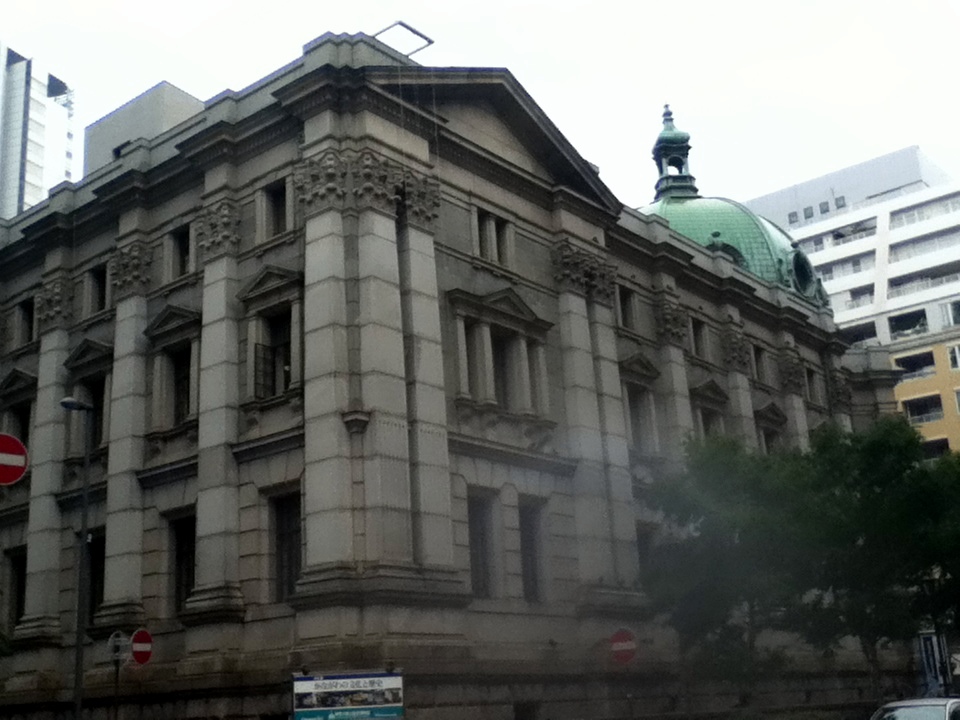
Kanagawa Prefectural Museum
Okay, I admit it. I’m from a VERY small town in a VERY small country, so my local county museum consisted of the old mansion home of a local famous/wealthy horse breeder, an old schoolhouse, and about a dozen ancient oil lamps and doilies. So in my mind, county museums mean small, not a whole lot to see, and an interesting hour or two.
Well, over the summer I was visiting Yokohama and ended up with a couple hours to spare. Since I was in the area, I decided to visit the Kanagawa Prefectural Museum, which is basically the city’s county museum. Now, I’m thinking I’ll see an old building, maybe catch a few old photographs, and see some old pottery, while still making it out in time to grab some souvenirs for family. But what I didn’t take into account was the fact that Midwestern US museums’ greatest events are the soldiers leaving for WWI, WWII and the wars thereafter.
Kanagawa, on the other hand, has thousands of years of history spanning dozens of empires and centuries of religious, cultural, and social upheaval and development. It’s survived hundreds of rulers, the bombings of WWII, the rise of Buddhism and the introduction of Christianity, the 1964 Olympics, and was the landing sight of Commodore Perry, the man who forcibly opened Japan to the west. So what I found was practically another national Museum.
Now, everything was in Japanese (and I do mean everything, even the brochures were untranslated). But it was also empty, so all the people were standing around waiting for people to come. They saw me wandering around and before I knew what was going on I have 4 different employees following me around with a translator machine explaining all the exhibits and what they meant. I got my own personal tour of this awesome place! Everyone was incredibly kind, and my visit (which actually took 3+ hours) was an unexpectedly amazing event.
I apologize for the quality of these photos, I ran out of film earlier in the day and was stuck with my Ipod. 😦 Still, they show what an amazing history this place has!
They also had Buddha statues, more sculptures than I could count, dozens of ancient maps, stunning paintings, and some amazing photography, as well as many other artifacts and cultural resources. It was a wonderful place to visit!
If you’re in the area and want to stop by, you can find out more information about the Museum here. I think it cost me about $6-7 total, but I don’t quite remember. Museums in Japan are more expensive than those in Korea, but I remember that this one wasn’t too bad. Great place to visit and it’s right down from Kannai street (a famous shopping street in Yokohama). Look it up!
“She was free in her wildness. She was a wanderess, a drop of free water. She belonged to no man and to no city” ~ Roman Payne
Social Media


My Websites

Traveler’s Loadstone

Language Translation






 Deceptively Blonde