
Tag Archives: Real Life
For, verily, great love springs from great knowledge of the beloved object, and if you little know it, you will be able to love it only little or not at all.
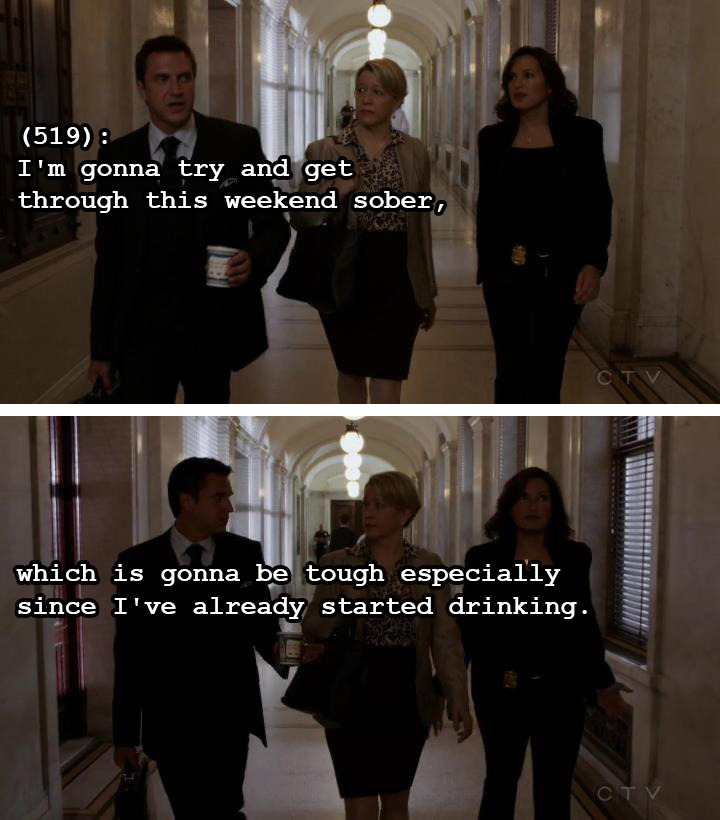
Hold On Tight
22 Aug
“Right now, the person’s hand that you hold – The chance of meeting that person is like a miracle. Even when you go into the light, don’t let go of that hand.”
~ Nobuta wo Produce
Family Day!
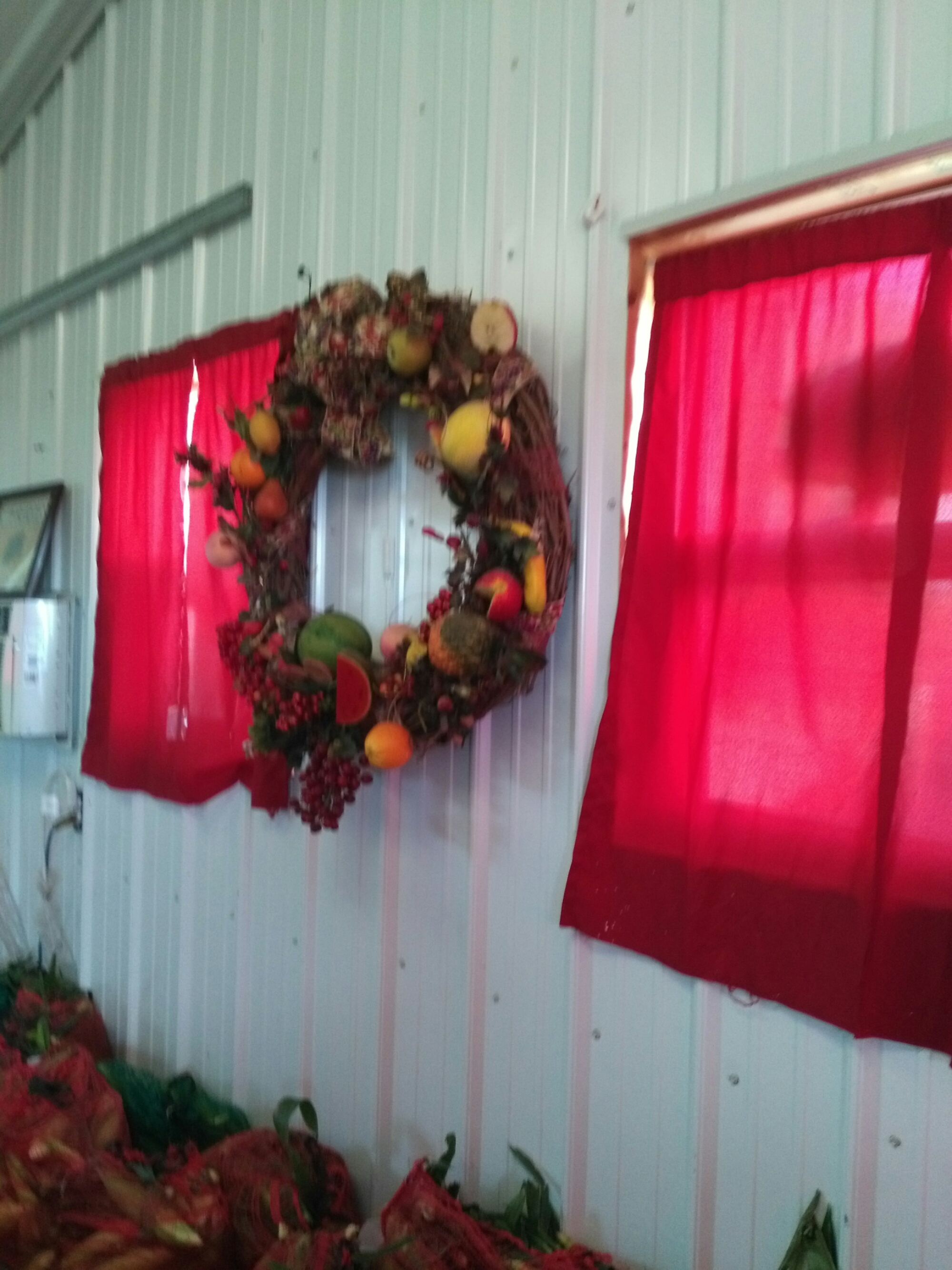
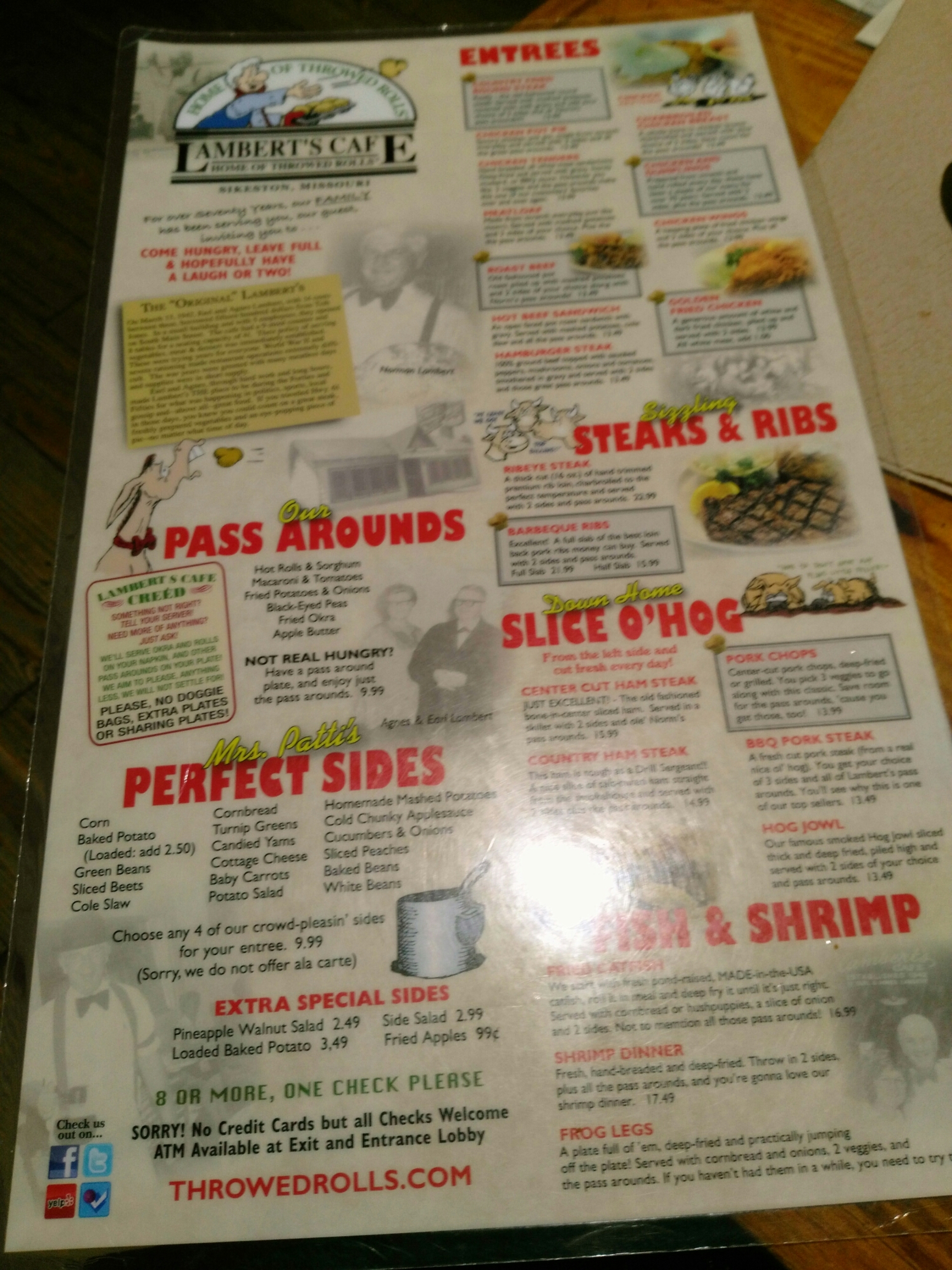
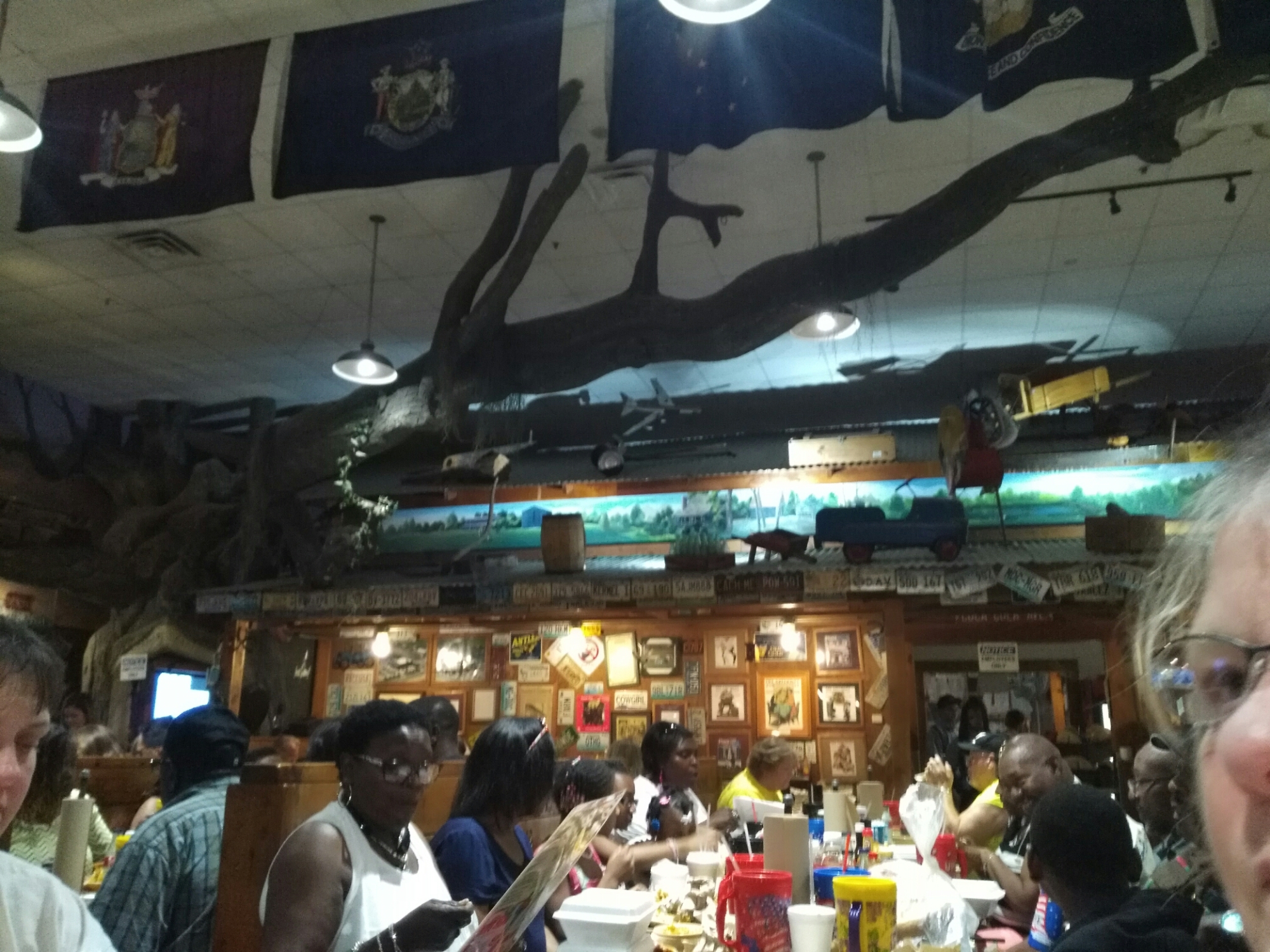
9 JulHanging with my cousins tonight! One daughter is a pianist, the other a dancer 🙂 My cousin helps children in the public schools escape dangerous situations or children without parents to get through school. And of course my awesome aunt! Good women!Went to a famous restaurant there Lambert’s (nationally known) where they throw your bread to you across the room 🙂








Cause Life’s a Mess
3 Jun“The 50-50-90 rule: Anytime you have a 50-50 chance of getting something right, there’s a 90% probability you’ll get it wrong.”
~ Andy Rooney

Life in China ~ Moving Money
21 AprHello!
I’m back again with a little piece of life in China! One of the significant issues confronting expats living abroad is the matter of getting money back into the States.
Whether it’s because you still have family at home, you want to put it in savings, or (like me) you have US/China bills to pay – almost everyone goes through the process of moving money from abroad back home or vice versa.

First things first, in China cash has three important vocabulary terms – Yuan, Jiao, and Renminbi. Renminbi (RMB) is the official name of the currency, and if you want to exchange money to the US Dollar (USD), you need to know that RMB abbreviation. We usually say “I need to exchange RMB to USD.” On the other hand, one Yuan ( ¥) is the most basic unit of money in China. In use, it is equivalent to our $1 bill although the exchange rate comes out very differently. Anyway, a bottle of soda here costs ¥3 which means three of the 1 Yuan bills (see above). They also have bills of ¥5, ¥10, ¥20, ¥50, and ¥100. ¥100 is the highest possible bill you can use. Finally, they have Jiao or fractions of a Yuan (10 Jiao, 5 Jiao, and 1 Jiao). 10 Jiao has the same value as ¥1, so we just call it 1 Yuan. 5 Jiao are 1/2 of a Yuan (i.e. 50 cents). 1 Jiao is 1/10 of a Yuan (i.e. 10 cents). The Jiao either come in paper or coins. So we have Cash (Yuan ¥) and Fractions of a Yuan (Jiao) used in the daily, current Chinese currency or RMB.
In some countries, it is probably more simple than others to send money. Perhaps because China is a UnionPay Nation, it can be rather difficult here. Union Pay is an alternative to VISA, Mastercard, ect. and is used in predominantly all Chinese banks. Of course, the banks in China are a little different too. For example, the bank card I was given does not include a security number or expiration date.And my phone number is 1***-****-****. Note the extra digit in the middle. So I have an incredibly difficult time using it online with American systems that require those details. More and more US businesses are modifying their system to accept Union Pay cards, but the additional information required for many credit card entry systems does not always work.
So how do we get our money from China into America? Currently, I have heard of four different primary methods or systems of transferring cash. One important factor is how much you need to exchange. Chinese nationals can exchange quite a bit more RMB to USD than foreign expats. Foreigners can only change $3000 a day.

REQUIREMENTS / NOTES
To do any of this you should have a passport, valid Chinese VISA, a Chinese phone number, and your home address written in Chinese characters.
You also most likely need a Chinese bank account. There are many, many Chinese banks but only some of them work in the International Money Transferring business. For Paypal, only China Merchant’s Bank, ICBC, and China Construction Bank. For Bank-to-Bank transfers or Western Union transfers there are a larger group of banks, but still only the primary ones (i.e. Bank of China, China Construction Bank –I think you can only accept money, not send it though-, Agricultural Bank of China, etc.) I recommend picking your method and then figuring out which type of bank account you need.
To open a Chinese bank account, you need to go during the work week (Monday-Friday) in order to get the right officials at the bank. The bank may be open on weekends, but the officials may not be there. I took a Chinese student and close friend with me. She had us bring our passports, VISAs, and recommended bringing a second photo ID like a driver’s license. We then went to the bank, filled out a lot of information on a form, and processed the account. Had to sign my name a couple times and then got my card.
I highly recommend that when you do this process you do a couple things to simply the process later. First, bring your Chinese phone number and add it to the forms so it is attached to your bank account. You will need this if you ever want to add Alipay, use Taobao, check your account online, etc. That phone number is one of the ways they verify that you own the account – they usually send a verification code by phone. Paypal verification process also sometimes requires that you accept the verification code by phone to enter it into the registration process. Second, ask them to approve you for online banking and tell them you will use the card for online shopping. The Chinese translator can hep, but they have to actually approve you for using your card online or using it to pay for something. So go ahead and get that paperwork filed this first time.

BANK TO BANK TRANSFER
Many people simply use the Chinese bank itself to transfer money over to a US Bank. Personally, I found it expensive and a bit of a hassle (especially since I work so much and getting to a bank with a Chinese student who can translate gets to be a problem).
To do this, you need to bring them your Passport (and Visa) and the foreign bank’s name, mailing address, routing number, swift code, account number, etc. You then probably need to bring a Chinese student with you to translate depending on where in China you are (Shanghai, they might speak English, but I’m in Henan where that ain’t happening). It usually costs you a few hundred RMB on top of the exchange rate. Sometimes you have to exchange the money first and then transfer it. Sometimes they will do that for you. It depends.

BANK TO BANK VIA PAYPAL TRANSFER
This is the method I find simplest and most effective. It requires a series of steps, but once set up is extremely easy and cheap (4% fee). You can send up to $1000 a day and Paypal will do the currency exchange for you! To do this though, you will need two Paypal Accounts and two email addresses. 🙂
Set Up
First, set up your US and China Bank Accounts. Make sure (as I said before) that the Chinese bank has approved you for online banking. China Merchant’s Bank, ICBC, and China Construction Bank are the only China Banks that this will work for! In a safe location, keep track of your account numbers and the full and exact name that is on your Bank Account. This is very important especially for the Chinese bank because the name must be exactly the same or they will reject it.
Second, set up a Paypal Global Account and use one email address. I recommend doing this with Google Chrome and then just right click on the page, hit “translate to English” and the Chinese will go away 🙂 Sign into the account and on the left click “Bank Accounts and Cards.” Now click “Link a Bank.” For country, choose “China-Bank Verification.” Name should be your first and last name as you used for Paypal. Choose your Bank (the list in order is ICBC, China Merchant’s Bank, and CCB). Continue. They will ask you to verify that this is your bank account. To do so download the pin number software as instructed and refresh the page. Input your Phone Number (per the Bank records) on top. Then enter your ATM withdrawal pin number. Then the “verification code.” If done correctly, Paypal will tell you the account has been verified.
Third, set up a US Paypal Account using another email address. Go through the same process of linking and verifying your bank account but add the US Bank this time. Paypal will tell you the account has been verified.
Use!
- Put your RMB in the Chinese Bank account.
- You can immediately go to your China Paypal Account and “Send Money” to your US Paypal Account’s email address. It’s easy. Just put in the email address, the amount of money you want to send, and under “shipping”, click “no Shipping required.”
- Go to your US Paypal Account. The money should be there pretty much instantly with no problem minus 4%. Now just click “Withdrawal” and send the money to your US bank account. It should be there in 3-5 Business days.
- Done! Wait for the money to arrive.
WESTERN UNION WIRE TRANSFER
Many choose to send money home via the Western Union Wire Transfer process. Western Union (西部联盟 – Xībù Liánméng) is an American Financial Company that will allow you to transfer money either from the USA to China or China to USA. You can do this via Money Transfer -You have to physically visit their offices, but they have many agents in the bigger cities. You can locate an agent here. Conveniently, they give you a tracking number for your receipt. Inconveniently, they only accept US Dollars and their exchange rates (I’ve heard) are fairly high if you do it there.
Their fees are
- $15 for transfers of $1-$500
- $20 for transfers of $501-$1,000
- $25 for transfers of $1,001-$2,000
- $30 for transfers of $2,001-$9,000. That is the highest they will do.
CASH AND CARRY
Last, of course many people simply carry their money home. If you don’t need to send money home monthly, it is an option to simply carry it home with you. There are two ways you can do this.
First, you take out cash in China and take it with you via plane back to the USA. I think this is dangerous because you are carrying too much money. Also, remember that RMB has its highest possible denomination in 100RMB (about $16). So if you take your money home in RMB, that’s a LOT of cash. If you take it in Dollars, it is dangerous.
Second, you can use your China bank card in the States. For example China Construction Bank has an agreement with Bank of America where you can withdraw money fairly cheaply and easily at their ATMs. You pay a small fee for using your card outside of China, but otherwise this is not too bad. Just remember to verify with your bank in China, because not all bank cards will work.

Life in China ~ a Party v. the Party
10 AprLMAO!
I was asking my students on our WeChat group (like a Group Chat) if they had class Monday night so we can schedule our exams.
D quickly replied “No, I have a party class.” 0_0
Party class? Say what!?! And I wasn’t invited? How rude!

The group erupted with 63+ Chinese-language messages in a matter of minutes as the class leader started with “What the HE** is a party class.” Another “ooh, class on how to dance.” “Let’s Party!” “Can I come?” “Do you get to drink?” Lots and lots of laughing pictures and emoticons.
At the same time a whole line of students with”I don’t think the teacher will understand.” “Oh, that’s a bad translation.” “The teacher is going to think you want to go party.” “This is very bad.” “You shouldn’t say that. You cannot trust translation my dear.” “Don’t you know to stop and check every three words? D replies again–“Oh, no! Now I think the teacher will misunderstand me!” (Horror Face).
At which point, the whole group started posting a series of Chinese phrases that have really bad English translations. Like “My father-in-law isn’t coming” which translates as “The father-in-law will not be coming to my bed.” It was bad 😛
My response: “Is that a class party? Party during class? Class about how to party?” This sounds fun and now I’m sad I wasn’t invited to the party lesson! 😦 😦 😦 ” LOL
Finally, one of them came back with a screen capture of the definition and translation in the Chinese-English dictionary of “Communist Party”–“It’s this one teacher, not a “party class” it’s THE Party class.” Ah! Makes Much More Sense. . . . And a much better reason for not being able to make the Exam on time! 😛
Do What you Love
30 MarFor, verily, great love springs from great knowledge of the beloved object, and if you little know it, you will be able to love it only little or not at all.
**Leonardo da Vinci

“She was free in her wildness. She was a wanderess, a drop of free water. She belonged to no man and to no city” ~ Roman Payne
Social Media


My Websites

Traveler’s Loadstone

Language Translation






 Deceptively Blonde