Tag Archives: Life in China

Life in China ~ Moving Money

21 Apr

Hello!

I’m back again with a little piece of life in China!  One of the significant issues confronting expats living abroad is the  matter of getting money back into the States.  

Whether it’s because you still have family at home, you want to put it in savings, or (like me) you have US/China bills to pay – almost everyone goes through the process of moving money from abroad back home or vice versa.

First things first, in China cash has three important vocabulary terms – Yuan, Jiao, and Renminbi.  Renminbi (RMB) is the official name of the currency, and if you want to exchange money to the US Dollar (USD), you need to know that RMB abbreviation.  We usually say “I need to exchange RMB to USD.” On the other hand, one Yuan ( ¥) is the most basic unit of money in China. In use, it is equivalent to our $1 bill although the exchange rate comes out very differently. Anyway, a bottle of soda here costs ¥3 which means three of the 1 Yuan bills (see above).  They also have bills of ¥5, ¥10, ¥20, ¥50, and ¥100. ¥100 is the highest possible bill you can use.  Finally, they have Jiao or fractions of a Yuan (10 Jiao, 5 Jiao, and 1 Jiao).  10 Jiao has the same value as ¥1, so we just call it 1 Yuan. 5 Jiao are 1/2 of a Yuan (i.e. 50 cents). 1 Jiao is 1/10 of a Yuan (i.e. 10 cents).  The Jiao either come in paper or coins. So we have Cash (Yuan ¥) and Fractions of a Yuan (Jiao) used in the daily, current Chinese currency or RMB.

In some countries, it is probably more simple than others to send money. Perhaps because China is a UnionPay Nation, it can be rather difficult here.  Union Pay is an alternative to VISA, Mastercard, ect. and is used in predominantly all Chinese banks.  Of course, the banks in China are a little different too.  For example, the bank card I was given does not include a security number or expiration date.And my phone number is 1***-****-****.  Note the extra digit in the middle.   So I have an incredibly difficult time using it online with American systems that require those details.  More and more US businesses are modifying their system to accept Union Pay cards, but the additional information required for many credit card entry systems does not always work.  

So how do we get our money from China into America? Currently, I have heard of four different primary methods or systems of transferring cash. One important factor is how much you need to exchange. Chinese nationals can exchange quite a bit more RMB to USD than foreign expats. Foreigners can only change $3000 a day. 

REQUIREMENTS / NOTES

To do any of this you should have a passport, valid Chinese VISA, a Chinese phone number, and your home address written in Chinese characters.

You also most likely need a Chinese bank account. There are many, many Chinese banks but only some of them work in the International Money Transferring business. For Paypal, only China Merchant’s Bank, ICBC, and China Construction Bank. For Bank-to-Bank transfers or Western Union transfers there are a larger group of banks, but still only the primary ones (i.e. Bank of China, China Construction Bank –I think you can only accept money, not send it though-, Agricultural Bank of China, etc.)  I recommend picking your method and then figuring out which type of bank account you need.

To open a Chinese bank account, you need to go during the work week (Monday-Friday) in order to get the right officials at the bank. The bank may be open on weekends, but the officials may not be there. I took a Chinese student and close friend with me. She had us bring our passports, VISAs, and recommended bringing a second photo ID like a driver’s license. We then went to the bank, filled out a lot of information on a form, and processed the account. Had to sign my name a couple times and then got my card.

I highly recommend that when you do this process you do a couple things to simply the process later. First, bring your Chinese phone number and add it to the forms so it is attached to your bank account. You will need this if you ever want to add Alipay, use Taobao, check your account online, etc. That phone number is one of the ways they verify that you own the account – they usually send a verification code by phone. Paypal verification process also sometimes requires that you accept the verification code by phone to enter it into the registration process.  Second, ask them to approve you for online banking and tell them you will use the card for online shopping. The Chinese translator can hep, but they have to actually approve you for using your card online or using it to pay for something. So go ahead and get that paperwork filed this first time.

BANK TO BANK TRANSFER

Many people simply use the Chinese bank itself to transfer money over to a US Bank.  Personally, I found it expensive and a bit of a hassle (especially since I work so much and getting to a bank with a Chinese student who can translate gets to be a problem). 

To do this, you need to bring them your Passport (and Visa) and the foreign bank’s name, mailing address, routing number, swift code, account number, etc.  You then probably need to bring a Chinese student with you to translate depending on where in China you are (Shanghai, they might speak English, but I’m in Henan where that ain’t happening).  It usually costs you a few hundred RMB on top of the exchange rate. Sometimes you have to exchange the money first and then transfer it. Sometimes they will do that for you. It depends.

BANK TO BANK VIA PAYPAL TRANSFER

This is the method I find simplest and most effective. It requires a series of steps, but once set up is extremely easy and cheap (4% fee). You can send up to $1000 a day and Paypal will do the currency exchange for you! To do this though, you will need two Paypal Accounts and two email addresses. 🙂 

Set Up

First, set up your US and China Bank Accounts. Make sure (as I said before) that the Chinese bank has approved you for online banking. China Merchant’s Bank, ICBC, and China Construction Bank are the only China Banks that this will work for!  In a safe location, keep track of your account numbers and the full and exact name that is on your Bank Account. This is very important especially for the Chinese bank because the name must be exactly the same or they will reject it.

Second, set up a Paypal Global Account and use one email address.   I recommend doing this with Google Chrome and then just right click on the page, hit “translate to English” and the Chinese will go away 🙂 Sign into the account and on the left click “Bank Accounts and Cards.” Now click “Link a Bank.” For country, choose “China-Bank Verification.” Name should be your first and last name as you used for Paypal. Choose your Bank (the list in order is ICBC, China Merchant’s Bank, and CCB).  Continue. They will ask you to verify that this is your bank account. To do so download the pin number software as instructed and refresh the page. Input your Phone Number (per the Bank records) on top. Then enter your ATM withdrawal pin number. Then the “verification code.”  If done correctly, Paypal will tell you the account has been verified. 

Third, set up a US Paypal Account using another email address. Go through the same process of linking and verifying your bank account but add the US Bank this time. Paypal will tell you the account has been verified. 

Use!

  1. Put your RMB in the Chinese Bank account. 
  2. You can immediately go to your China Paypal Account and “Send Money” to your US Paypal Account’s email address. It’s easy. Just put in the email address, the amount of money you want to send, and under “shipping”, click “no Shipping required.” 
  3. Go to your US Paypal Account. The money should be there pretty much instantly with no problem minus 4%. Now just click “Withdrawal” and send the money to your US bank account. It should be there in 3-5 Business days.  
  4. Done! Wait for the money to arrive.

WESTERN UNION WIRE TRANSFER

Many choose to send money home via the Western Union Wire Transfer process. Western Union (西部联盟 – Xībù Liánméng) is an American Financial Company that will allow you to transfer money either from the USA to China or China to USA. You can do this via Money Transfer -You have to physically visit their offices, but they have many agents in the bigger cities. You can locate an agent here. Conveniently, they give you a tracking number for your receipt. Inconveniently, they only accept US Dollars and their exchange rates (I’ve heard) are fairly high if you do it there.

Their fees are 

  • $15 for transfers of $1-$500
  • $20 for transfers of $501-$1,000
  • $25 for transfers of $1,001-$2,000
  • $30 for transfers of $2,001-$9,000. That is the highest they will do.

CASH AND CARRY

Last, of course many people simply carry their money home.  If you don’t need to send money home monthly, it is an option to simply carry it home with you.  There are two ways you can do this.

First, you take out cash in China and take it with you via plane back to the USA. I think this is dangerous because you are carrying too much money. Also, remember that RMB has its highest possible denomination in 100RMB (about $16). So if you take your money home in RMB, that’s a LOT of cash. If you take it in Dollars, it is dangerous. 

Second, you can use your China bank card in the States. For example China Construction Bank has an agreement with Bank of America where you can withdraw money fairly cheaply and easily at their ATMs. You pay a small fee for using your card outside of China, but otherwise this is not too bad.  Just remember to verify with your bank in China, because not all bank cards will work. 


Life in China ~ the Currency

18 Apr

Hello!  

A new “Life in China” post is here 🙂 . This week, I’m kind of focusing on Money and Banking in China.  I wanted to start by looking at Chinese currency or money and what it is worth. 🙂 

In China there are three important money terms you should know- Yuan, Jiao, and Renminbi.

 Renminbi (Ruhn meen bee)  is the official name of the Chinese currency and is abbreviated on the foreign exchange market as RMB.  So if you wanted to exchange money to the US Dollar (USD), you would officially say “I need to exchange RMB to USD.” 

The RMB is then broken down into Yuan (yoo ehn), their most basic unity of money which is usually noted with a ¥. Because the Yuan is more commonly discussed, the exchange market will sometimes informally abbreviate the currency as CNY.   Do not confuse this with the Japanese Yen ( ‎¥‎) which has the same symbol or the Korean Won which sounds remarkably similar (the names of both the Japanese and Korean currencies are actually derived from the word Yuan and thus it can be quite confusing).

 Basically, the RMB has its own version of the dollar bill called a Yuan. So if we were talking about the Chinese currency, we would use Renminbi. But if we were asking about specific amounts of money (i.e. how much is that, how much is in your bank, this costs _____), we use Yuan. ¥6  is approximately $1 in foreign exchange (meaning that for every $1 you would get ¥6 or vice versa.  

On the streets, Yuan = Mao = Kuai = Kuai Qian.   Mao because the bills all have the face of Chairman Mao on them–to be honest this is more common amongst expats than locals 🙂 . Kuai (coo aye) because that is the ancient Chinese word for “piece” when they used pieces of silver. Kuai Qian (coo aya chee ehn) because that is the ancient Chinese phrase for “Pieces of Money.”  So just like Americans speak in both “dollars” and “bucks,” the Chinese might at any given moment talk about “Five Yuan,” “Five Kuai” or “Five Kuai Qian.”  Listen carefully when they speak–and don’t mix up the Qian (money) for Qi (7) since they sound similar to us!

Yuan come in bills of ¥1, ¥5, ¥10, ¥20, ¥50, and ¥100 respectively. ¥100 is the highest possible bill you can use (which makes for a funny sight for companies since it’s not actually a lot of money – $16 –  and most people don’t use cards here. So you are constantly paying in cash, which means that the store always has tons of cash on hand. You’ll see people coming and leaving the bank with hundreds of “¥100” bills in their purses.  I have to deposit a whole wad each time my paycheck. Little dangerous, but makes me feel quite rich! 🙂

One Yuan (Yi Yuan)

On the front is Chairman Mao Zedong and the number 1. On the back is the very famous  Xi Hu Lake or West Lake in Hangzhou.


There is also a One Yuan Coin:

Five Yuan (Wu Yuan)

On the front is Chairman Mao Zedong and the number 5. On the back is Taishan Mountain (泰山) in the Shandong Province.

Ten Yuan (Shi Yuan)

On the front is Chairman Mao Zedong and the number 10. On the back is the Yangtze River’s Three Gorges (Qutan, Wu, and Xiling). 

Twenty Yuan (Er Shi Yuan)

On the front is Chairman Mao Zedong and the number 20. On the back is the Lijiang River at Guilin 

Fifty Yuan (Wu Shi Yuan)

On the front is Chairman Mao Zedong and the number 50. On the back is the Potala Palace in Lhasa, Tibet.

One Hundred Yuan (Yi Bai Yuan)

On the front is Chairman Mao Zedong and the number 100. On the back is the Great Hall of the People (close to Tienanmen Square in Beijing) which is where the National Congress is held.


Chinese Coins or Cents

Of course, where America has its dimes, nickels, and quarters, China has its Jiao (fractions of a Yuan). Jiao actually comes in either coins or bills as you can see pictured below. There are  5 Jiao (1/2 of a Yuan in value) and 1 Jiao (1/10 of a Yuan in value). For Americans, it would be similar to having a  50 cent piece and a dime.  So we have Cash (Yuan ¥) and Fractions of a Yuan (Jiao) used in the daily, current Chinese Renminbi currency or RMB.

Five Jiao (usually written as ¥.5) (Wu Jiao)

One Jiao (usually written as ¥.1) (Yi Jiao)


Life in China ~ a Party v. the Party

10 Apr

LMAO!

I was asking my students on our WeChat group (like a Group Chat) if they had class Monday night so we can schedule our exams.

D quickly replied “No, I have a party class.” 0_0

Party class?  Say what!?!  And I wasn’t invited?  How rude!

The group erupted with 63+ Chinese-language messages in a matter of minutes as  the class leader started with “What the HE** is a party class.” Another “ooh, class on how to dance.” “Let’s Party!” “Can I come?” “Do you get to drink?” Lots and lots of laughing pictures and emoticons.

At the same time a whole line of students with”I don’t think the teacher will understand.” “Oh, that’s a bad translation.” “The teacher is going to think you want to go party.” “This is very bad.” “You shouldn’t say that. You cannot trust translation my dear.” “Don’t you know to stop and check every three words?  D replies again–“Oh, no! Now I think the teacher will misunderstand me!” (Horror Face).

At which point, the whole group started posting a series of Chinese phrases that have really bad English translations.  Like “My father-in-law isn’t coming” which translates as “The father-in-law will not be coming to my bed.” It was bad 😛 

My response: “Is that a class party? Party during class? Class about how to party?” This sounds fun and now I’m sad I wasn’t invited to the party lesson! 😦 😦 😦 ”  LOL

Finally, one of them came back with a screen capture of the definition and translation in the Chinese-English dictionary of “Communist Party”–“It’s this one teacher, not a “party class” it’s THE Party class.”  Ah! Makes Much More Sense. . . . And a much better reason for not being able to make the Exam on time! 😛


Tomb Sweeping Festival

3 Apr

image

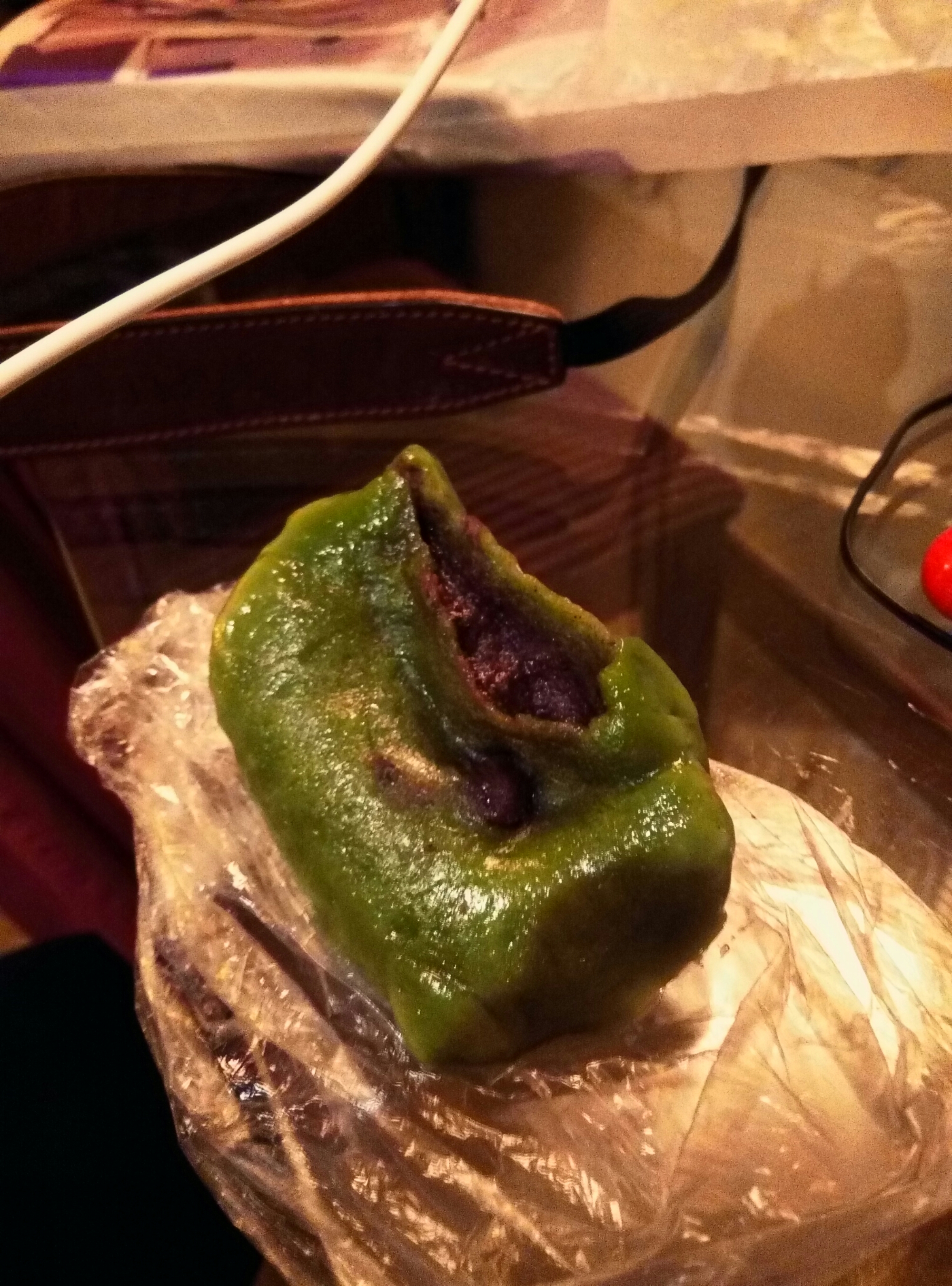
Eating in Shanghai this morningsng for the tomb sweeping festival (sort of like our Memorial Day.) They were serving Sweet Green Dumplings  (青团 qīngtuán) filled with red bean paste. Only served once a year!

image

Life in China ~ Flying English Club

28 Mar

DSC_0876

During my stint as a teacher here in China, I’ve had the opportunity to participate in several different campus activities with the students. One of the clubs I have worked with a lot is called the “Flying English Club.” Filled with a mixture of Freshmen, Sophomores, and Juniors, the club has a great collection of students from all around. Even some of the international students join in as a chance to meet Chinese students! 

mmexport1458433463316

Last night, they invited me to a BBQ at one of their teacher’s buildings, so I went out for a night of fun and food. We had such a wonderful time! The students cooked delicious food including sweet potatoes, grilled meat (pork, beef, squid, chicken, mutton), broccoli, mushrooms, green beans, lettuce / grilled greens, tofu, and more. They had also prepared some delicious fruit trays with apples, pineapple, dragon fruit, banana, oranges, tomatoes, and other yummy snacks. So good!  

If you have the chance to go out with your students and play, you should take it! It’s not every day that people can have so much fun 🙂

DSC_0877

Life in China ~ Bring It (Managerial Econ Style)

22 Mar

😛 I am teaching a class of students whose English is particularly bad, but I had them last semester too and we have been moving along. It takes translating every couple of words (money, war, economy, market, cash, coin, card) to communicate, but we were happy with our steady if slow pace 🙂 

Then Today, I had two new students join the class from Int’l Trade 1 (the best students, include one who has excellent English). At the beginning, I asked the students to translate one of the words as usual. Normally it takes us a bit to look it up and figure out a Chinglish version. Now, immediately the new boy spits out verbatim the precise 3 sentence long definition from the textbook by memory. 0_0 It was the funniest thing. The entire class stopped, turned and stared at him. One girl threw up her hands, another started groaning. The entire group almost in unison went “ooooohhhhhh” and one actually WHIMPERED. LOL. He jerked back and looked around. After that he figured out pretty quick the others weren’t at that level. 🙂 Seriously, we’re working at “this is called demand” level and he’s off on QD = a + bP + cT + . . . . level. Boom. . . mic dropped, bar raised.

Life in China ~ Blossoms of Spring

21 Mar

Gave some exams near the Campus Library  and got this treat 🙂 Green and Pink, my favorite colors! I just love the beauty of the flowering season. And here in China, it’ll last until well into the fall!

Life in China~ Simple Chinese (Meats)

18 Mar

Life in China is so much simpler with a few Chinese “food” words under your belt. To be honest, I prefer the places where I can point and buy. But even then, you often want to verify the type of meat because pictures are hard to discern or you may not want to eat certain meats. For example, I have many Muslim students from Indonesia or Malaysia who want to avoid Pork. I personally don’t do fish or seafood due to allergies. To help, here is a list of common meats in simple Chinese!

  • Meat = 肉 = Ròu = Roh
  • Chicken = 鸡肉 = Jīròu = gee roh
    • Jī being chicken. So if you want a specific part of the chicken add Chicken (Jī) then the part (i.e. Chicken Wings = jī chì). 
  • Pork =猪肉 = Zhūròu = Joo roh
  • Beef = 牛肉 = Niúròu = New roh
  • Fish = 鱼 = Yú = Yoo
  • Shrimp = 虾 = Xiā = Tseeah (fast)
  • Mutton = 羊肉 = Yángròu = Yahng roh
  • No ________  = 不 + Meat= Bù + Meat

The most common varieties are chicken, pork, beef, and mutton. They are used almost interchangeably in rice dishes, baozi (dumplings), noodles, etc. Plus, there is often a “red bean” or “vegetable” option containing no meat. So if you want meat in your dish, use one of these words to A. make sure meat is included and B. that it’s the meat you want 🙂


Happy St. Patrick’s Day (From China)

17 Mar

I was the only foreign teacher initially dressed up for St. Patrick’s Day today! Such a tragedy! I, looking so awesome, of course promptly shamed a couple people into going back and adding some green to their wardrobe.  (ehm, Andre –better a late green than never). . .

Having class today, I asked my students if they knew what holiday it was. They didn’t (another great sorrow of my life), so I brought up pictures of the Parades for them to see and told them about the leprechauns and the green Chicago river.  🙂 

I finished by letting them know that if they didn’t hurry home and add some green themselves, it was perfectly likely they might get some pinching. Their eyes went so wide. 0_0 It was hilarious. Made my day!

So happy St. Patrick’s Day!!


Life in China ~ Alternative Babydoll Lifestyles

14 Mar

DSC_0088

DIAPERS v. THE SQUAT & GO

Was sitting at the window in KFC (yes, thank God we have KFC here–our only Western restaurant in the area!) when I saw the funniest “cultural difference” on display.

Growing up, I frequently worked as a babysitter for children in the States. The little girls loved their dolls and treated them like real children.  They dressed them, fed them bottles, rocked them, and–always funny–changed their diapers.

Well little girls in China are the same–sort of.  This local girl was waiting with her mom at the bus stop and playing with her doll.  She rocked the dolly, patted the dolly, played with its dress.  But then, she proceeded sit the dolly in a crouch and teach it how to do its bathroom business out on the sidewalk.

That’s how children go to the bathroom here. The parents take them outside on the sidewalk, they drop trou, crouch, and do their stuff. The babies all have split pants (pants with large holes around the bottom-area), and they don’t even have to pull their pants down.  

Once I though about it, of course that’s their version of changing diapers–it makes total sense! But it was still hilarious to watch. Seriously, she patted it, talked to it, helped straighten its dress when it was finished.  Such a good mommy-to-be!  But talk about cultural differences! 😛